

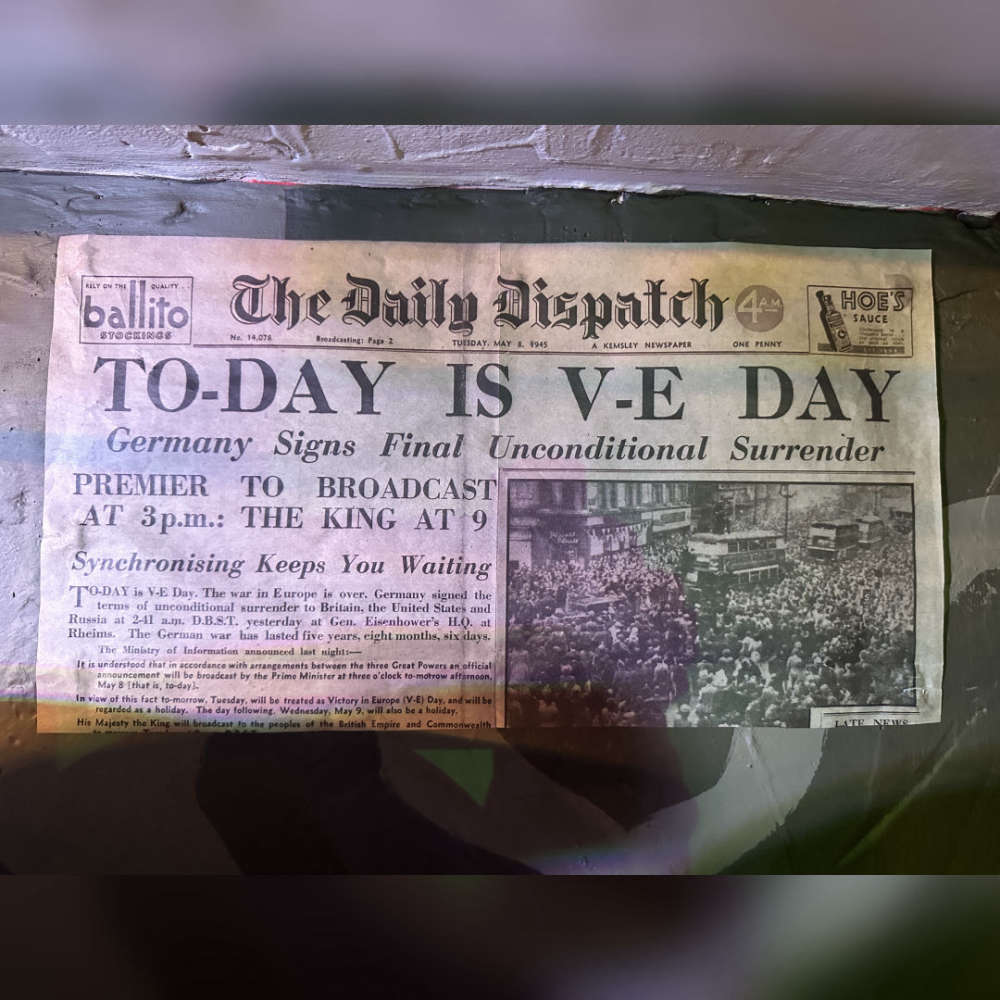
Last Friday was the 81st anniversary of VE Day and Tameside resident Ray Fricker opened the doors to a remarkable private collection that turns part of his home into a living museum of wartime history
The setting is modest, but the contents are extraordinary. Ray’s front room is filled with helmets, guns, medals, ration books, telephones, uniforms and other military objects collected from conflicts stretching from the First World War to the Cold War era. He described the room as a place where history is not locked away behind glass, but displayed in a way that visitors can examine up close and, in some cases, even handle.
Ray said the collection has taken years to build and requires constant attention. He explained that some of the items are hundreds of pieces, spread across different corners of the room and beyond, making organisation as much of a challenge as the collecting itself. New acquisitions are tracked, restored and displayed carefully, with a strong emphasis on keeping everything as original as possible.
One of the most striking items on show is a World War I mortar, dug up after being buried in the ground and still capable of firing a loud report, though not the original gas canisters. Ray said weapons and explosives are always treated with caution and checked repeatedly to ensure they are safe. He also pointed out a range of Second World War guns and rifles from different countries, including British, American, Russian, German and Italian examples.
Many of the display pieces have been restored by Ray after arriving in poor condition. He said some items are so damaged when they are found that they would otherwise be impossible to show properly, and that careful restoration is part of giving them a second life. A corroded bicycle in the room, for example, was rebuilt enough to ride again, while various weapons and fittings have been cleaned and repaired without losing their original character. Ray stressed that everything he values most is genuine, and that authenticity matters because the objects are meant to carry history, not imitate it.
The collection includes a wide mix of helmets and headgear from British, American, German and other forces, each chosen to show how soldiers were protected in different situations. Ray explained the purpose of specialist helmets used in aircraft and naval service, noting how some were wired for communication and designed to reduce shrapnel injuries. He also highlighted military figures dressed in full kit, including a British soldier prepared for D-Day with a Sten gun, maps, pouches and other equipment, and another figure representing an injured pilot returning from combat.
The weight of that equipment, he said, is easy to underestimate. Soldiers carried gas masks, ammunition, weapons, maps and personal gear, often in wet and difficult conditions, making movement extremely hard. Ray used the displays to underline just how physically demanding combat could be, especially when movement, visibility and communication were all compromised by weather and battlefield conditions. The room, he said, helps visitors understand that war was not only dangerous, but exhausting and heavily improvised.
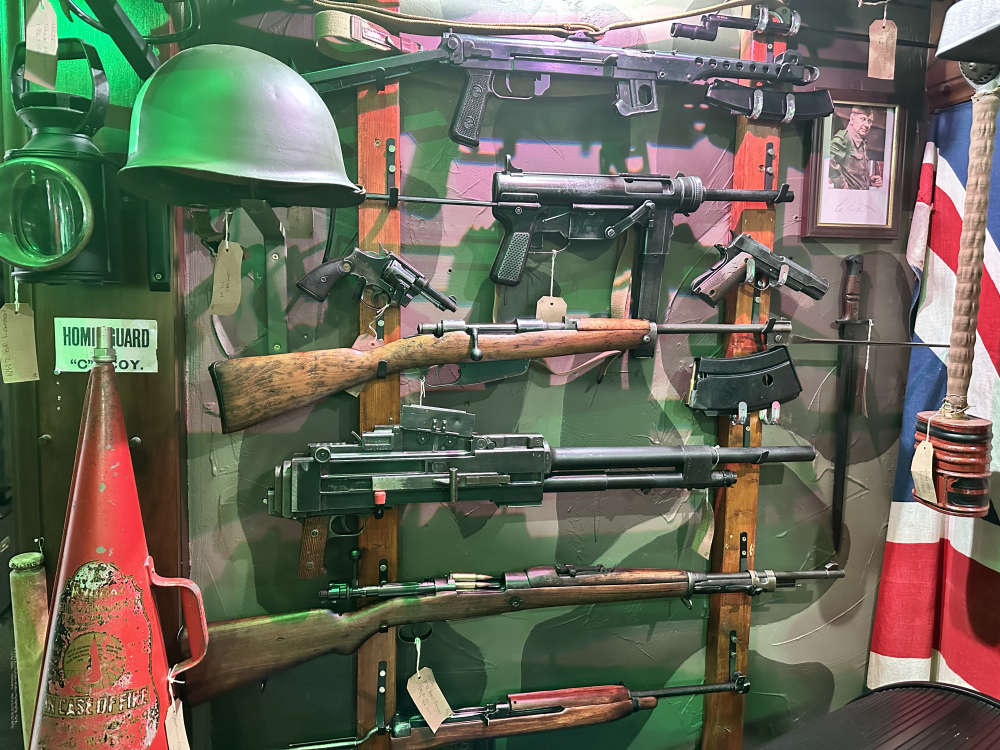
Among the more unusual pieces is an ashtray made from brick recovered after the bombing of the Houses of Parliament in the 1940s. Ray said the item was created from the remains of bomb damage and sold to raise money for people affected by the raids, turning destruction into a small but lasting memorial. Another standout is a genuine fragment of the Berlin Wall, which he said found its way into the collection as another piece of modern history worth preserving.
The room also includes a wide selection of helmets and artefacts linked to D-Day and the Normandy landings. Ray said many of the items were picked up from different beaches and battle sites, each one carrying its own story of conflict, survival and remembrance. He also pointed out a First World War helmet from the Somme and an SS cap among the collection, reinforcing the breadth of material on display.
A ration book from the Ministry of Food sits among the wartime objects, a reminder of home-front sacrifice and the restrictions faced by civilians during the war.
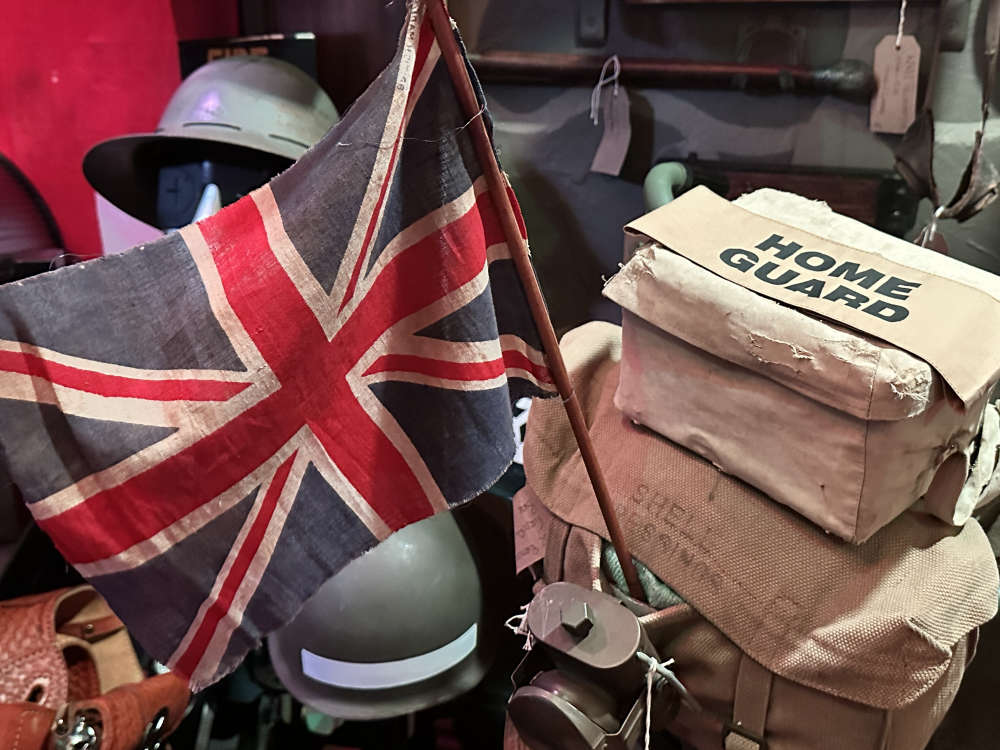
Ray’s enthusiasm for the collection is rooted in a deep belief that these objects should be preserved for future generations. He said that once history is lost, it cannot be brought back, and that protecting original pieces is part of respecting the people and events they represent. That sense of responsibility appears to drive everything he does, from sourcing rare items abroad to restoring damaged artefacts and explaining their significance to visitors.
The collection has become something far bigger than a private hobby. It is part archive, part museum and part tribute to the men and women whose experiences are represented by the objects on the shelves, walls and tables. Ray said people often arrive expecting a quick look and end up spending hours inside, absorbed by the stories attached to each item. In a year marking the 81st anniversary of VE Day, his Tameside home offers a powerful reminder that remembrance can also be found in the careful preservation of the things history left behind.
 Ruby wins Summer Reading Challenge prize
 331 families sign up for Hattersley Community Grocery
 Young gun takes Celtic hot seat
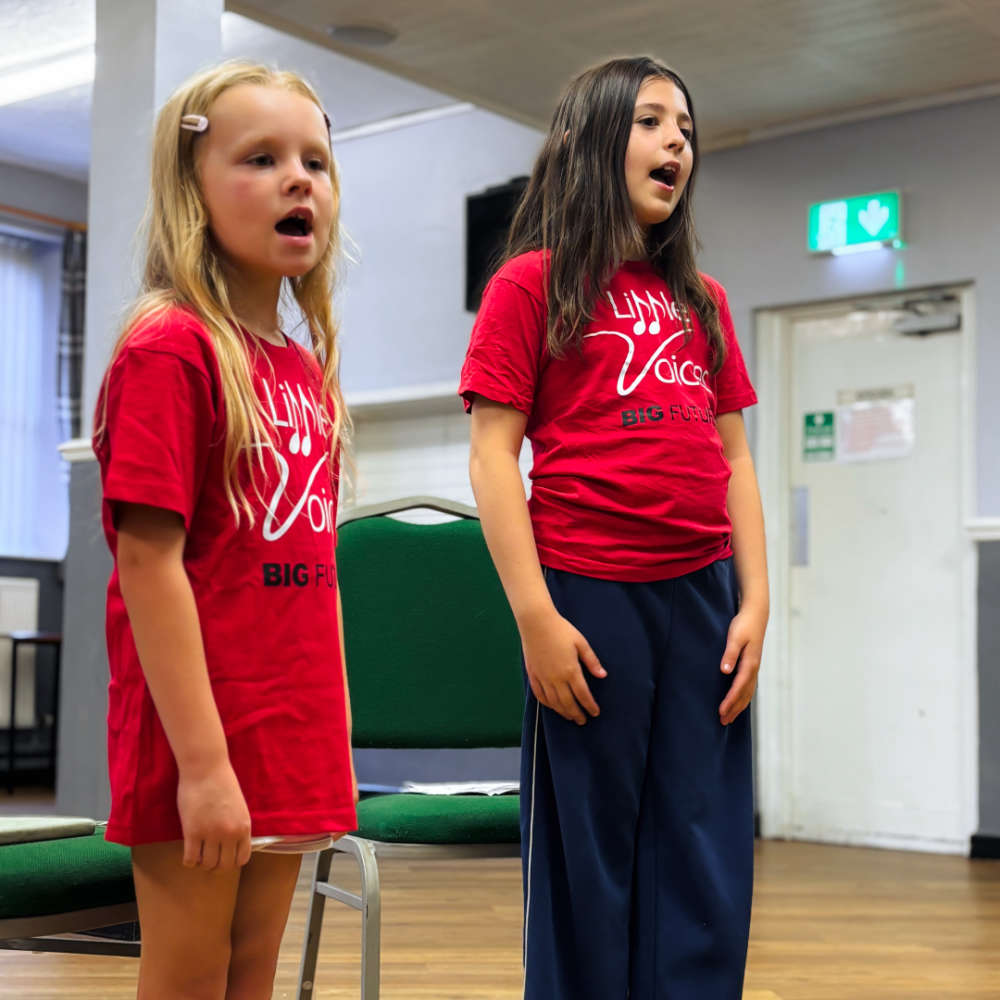 Little Voices is expanding into Mossley