

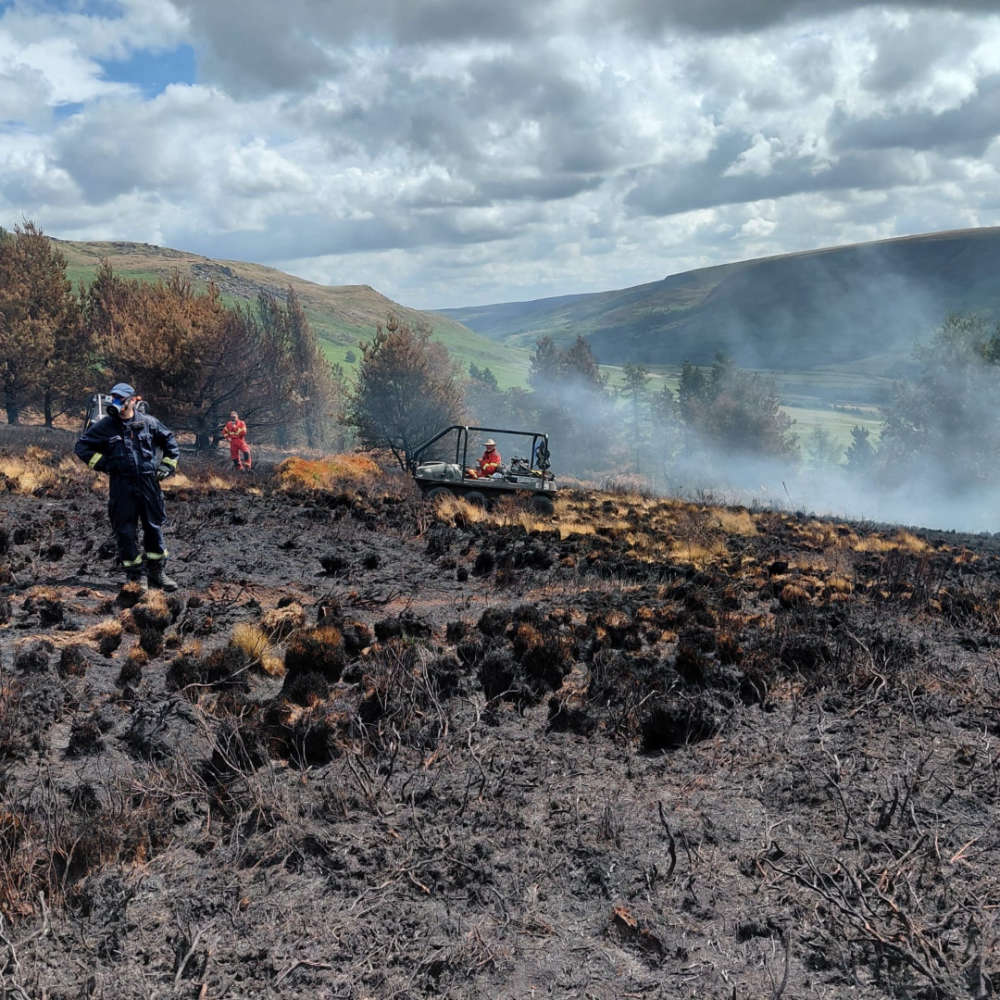
Heat seeking drones are giving United Utilities ‘eyes in the sky’ as teams continue to tackle lingering heat hotspots following recent moorland fires.
Despite the temperature drop and rain, pockets of lingering heat still remain on the moor, these carry a risk of reigniting.
Teams from the water company for the North West have been working closely with emergency services providing equipment and people to fight moorland fires since they first broke out at the end of June.
During the peak of the blazes, United Utilities provided several helicopters which made 2,000 trips and distributed more than 20 million litres of water – the equivalent of eight Olympic sized swimming pools - to help bring the fires under control. Fire and rescue services were also pumping water directly from reservoirs to fight the blazes.
Now United Utilities has taken to the sky again using thermal drones to pinpoint the location of lingering hotspots.
Although the major incidents have been scaled back, firefighting efforts continue for members of the company’s catchment teams at Dovestone and Tintwistle as they patrol the moors seeking out and extinguishing lingering hotspots.
Lindsay Page, United Utilities’ lead for Water Services in Greater Manchester explained:
“Bringing these fires under control has been a huge team effort which has seen our teams and other partners including the RSPB, Derbyshire Mountain Rescue, Peak District National Park and others working thousands of hours together alongside fire and rescue services for several weeks.
“Although there are no longer any visible flames and even with the recent rain, our teams are still out there every day. When fire burns on peatland, it can form pockets of heat underground and there is a risk of these re-igniting. Monitoring these from the ground is challenging as teams need to scan large areas for signs of smoke which can be difficult to spot.
“These new thermal imaging drones are game-changing as they pinpoint the problem areas so we can target our resources to the right place at the right time.”
The company had already trained members of the team as drone pilots to help with monitoring assets in remote locations and now the thermal heat-seeking drones are being flown to scan large areas of moorland at one time. Once hotspots are found, the GPS coordinates are shared and teams head straight out to extinguish them.
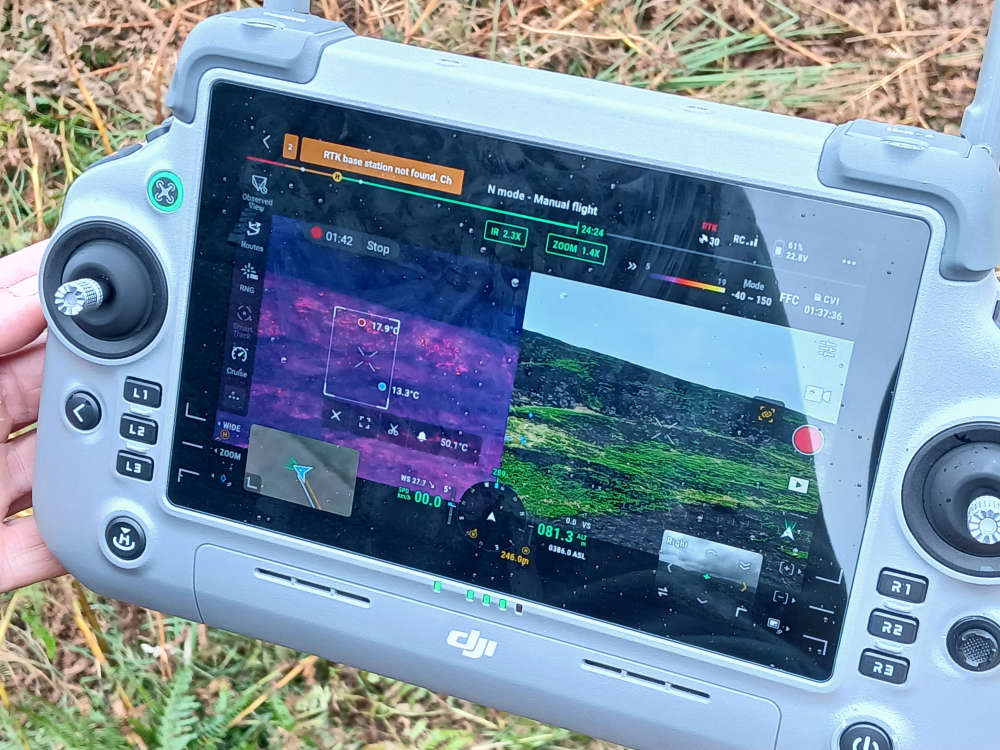
Lindsay Page added: “It is still a difficult task as teams are working in very challenging terrain and carrying heavy loads of water with them but now they can head out knowing just where to go. It really is a case of X marks the spot.
“As well as helping them to be precise in targeting the areas that need attention, it also speeds things up a lot because they aren’t spending hours scanning for hotspots.”
Temporary dams holding thousands of litres of water are still in place across the moors to give teams easier access to water supplies to extinguish the hotspots.
The thermal drones can also be used on an on-going basis for environmental monitoring, infrastructure assessments and even to support leakage detection.
 New Droylsden Marina development officially tabled
 Stalybridge Street Fest returns tonight (come rain or shine)
 Poplar Street Primary School celebrates positive Ofsted report
 Decision on Droylsden landmark due next week