

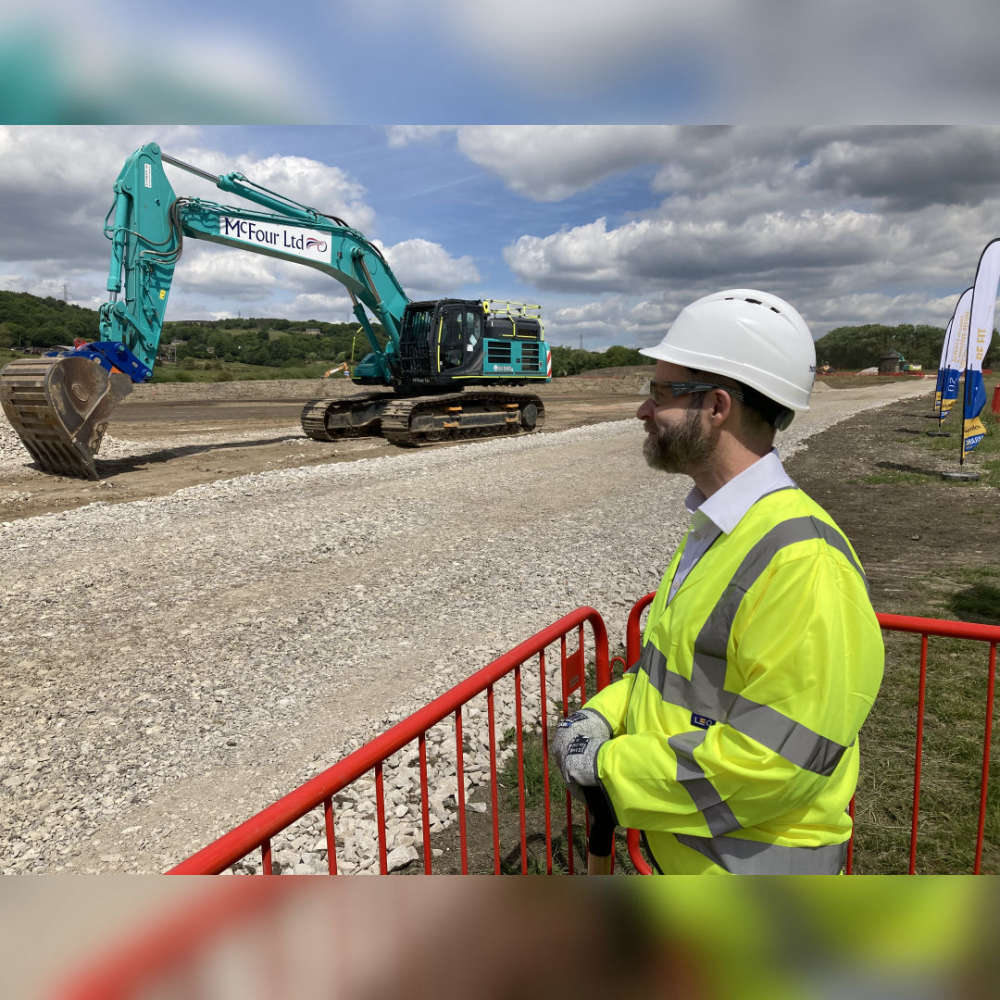
The idea to build a 14-mile tunnel beneath the Peak District mountains could end the ‘frustration of traffic congestion’ plaguing one corner of Greater Manchester.
The Norway-inspired dual carriageway would see the snakes of traffic commuting between Manchester and Sheffield removed from the national park, and sent underground instead. The scheme, named ‘Trans-Pennine Connect’, could cut travel times between the two cities by 30 minutes and restore the Woodhead railway line alongside it.
The fast line between the two major northern cities closed to the public in the 1970s and then entirely in 1981.
Reducing congestion around the Mottram area of Tameside has been a long-held ambition of the local MP Jonathan Reynolds. He has successfully campaigned for the A57 link road scheme that is currently under construction.
This tunnel plan, if it ever gets the go ahead, would connect to the link road scheme that is due to be completed around 2030. Mr Reynolds has welcomed the idea that could benefit motorists coming through his patch.
Jonathan Reynolds, MP for Stalybridge and Hyde, said: “People across the area and particularly in Hollingworth know all too well the frustration of traffic congestion and the impact it has on everyday life along the A628.
“If these proposals can improve connectivity across the Pennines and protect the National Park while finally delivering the bypass solution local communities have been calling for over many years, that would be really welcome.”
Fresh plans to build the stretch of 14-mile dual carriageway come years after the government shelved a similar scheme – estimating a £10.6bn cost. Now Future Works, a group of infrastructure experts, believe this can be done for just under £2bn.
‘Trans-Pennine Connect’ aims to make transport between south Yorkshire and the north west better. By putting that traffic underground, they say they can hand the Peak District landscape back to nature.
This in turn, they say, could boost the productivity of the region and inject millions into the local economy.
Michael Dnes, co-founder of Future Works, says he had guilt about the scheme never getting off the ground during his time working at the Department for Transport. And when he left DfT he sought out a cheaper way of getting it done.
He looked to Norway for answers – who built the world’s longest road tunnel, the 24.5km Lærdal in Norway, for around £130 million.
Rather than using the standard British approach of a tunnel-boring machine, Future Works has looked into the drill-and-blast method applied to tunnels in Norway. This system replaces giant machinery with more traditional mining techniques, the natural strength of the rock and small expert crews.
Although this would not work in many areas of the UK, the expert teams believe this ‘drill-and-blast’ method could work in this area due to the geology of the Pennines. This is because the tunnels built in Norway go through mountains with similar rocks.
 Ruby wins Summer Reading Challenge prize
 331 families sign up for Hattersley Community Grocery
 Little Voices is expanding into Mossley
 Sinkhole threatens Park Bridge Remembrance Sunday service