
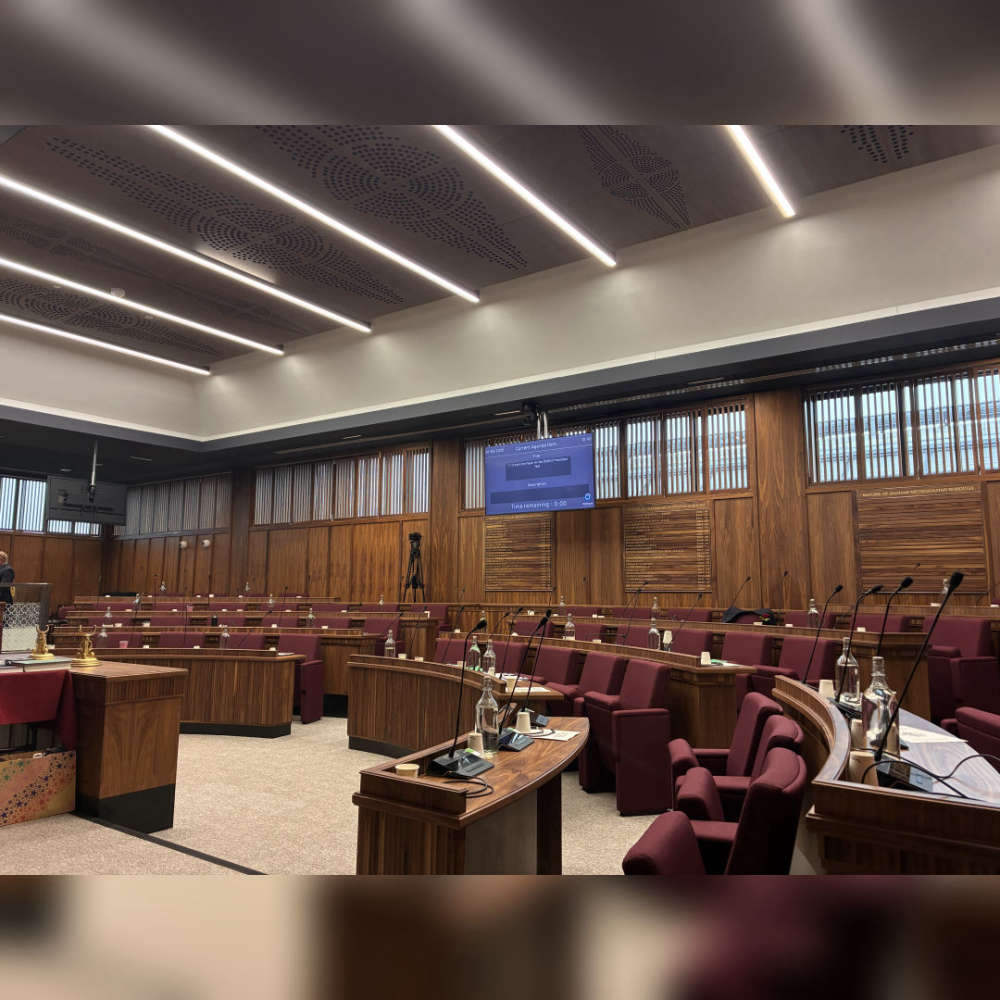
After weeks of political stand-offs, negotiations, and online speculation, councillors in Oldham have finally agreed on one thing: they’ll have to work together if they want the council to function.
Since May, the council has been left without a leader. With no political group having enough members or enough support to gain control of the council, the local authority has been left ‘rudderless’.
Officers recently declared the authority was officially ‘breaking the law’, according to the council constitution. Government officials have been called in to mediate between political groups and decision-making has been left to unelected officials, all while councillors are locked in heated and circular debates about who does – and doesn’t – deserve to be boss.
“This isn’t how things are supposed to be,” said Oldham’s chief executive Shelley Kipling. For weeks, under the ‘watchful eye’ of government officials, she has been hashing out a new system with leaders of the biggest political groups on the council to make it slightly more functional.
At a full council meeting on Wednesday evening, a consensus was finally found across the political spectrum to implement this system.
Responsibilities that would have fallen to the leader and cabinet members will be split across groups according to their proportion in the council.
It’s only a stop gap solution to make sure the council doesn’t end up in breach of some of its most fundamental requirements – but it’s the first signs of accord seen for a long time.
Councillors attended the meeting with a mixture of hope and dread – some with caffeine-infused chewing gum on hand in preparation for what could become another long night.
Addressing the council chamber, CEO Kipling said: “This report is not an attempt to appoint an administration. It will not negate the unlawfulness of having no leader and no full lead member for children’s services. It is not a political agreement. It is not a deal, not a coalition, and not a working agreement. It is simply a series of recommendations that seeks to protect council services and decision making during this period of uncertainty. The proposal is about plugging some of the gaps in accountability, scrutiny, and political oversight that have been created by the council having no administration.
“We are in a precarious and unprecedented situation, where I as chief executive am undertaking all executive decision-making using my emergency powers. That is not how councils should function.
“None of these proposals are a perfect solution to the situation we find ourselves in. I need to be clear that the alternative to our endeavour to keeping council services running is intervention by the government. Intervention is not a neutral act. It will have an impact on our finances, on our workforce, and on you [councillors] and your ongoing ability to decide the direction of this council as you were elected to do.”
Group leaders had informally agreed to support the proposals ahead of the meeting, the LDRS understands. But proceedings were thrown into jeopardy when the new leader of Oldham’s Reform UK group declared their members intended to abstain from voting.
The declaration prompted a 50-minute adjournment for leaders to consult behind closed doors, while remaining councillors shared the distressing news that the town hall’s coffee machines had run out of milk. During the adjournment, Reform members were said to be left debating amongst themselves.
Ultimately, the proposal was passed with 46 votes in favour. Four councillors abstained – the two Royton Independents, alongside Reform UK councillors Paul Taylor and Rob Jackson. Reform UK councillor Gary Tarbuck voted against the report, and was later seen storming out of the council chambers.
The temporary governance structure will see the Lib Dems in charge of Resources, Labour in charge of Place, Reform in charge of Children and Young People, and the Oldham Group in charge of Health and Adult Care. None of the ‘bosses’ will have executive powers – so won’t be able to make policy or spending decisions for their respective areas, but rather will be given political oversight of decisions being made by officers.
The chairs of scrutiny boards and committees would be split as follows:
Licensing Committee – Reform UK
Planning Committee – Labour
Children and Young People Scrutiny Board – Reform UK
Adult Social Care and Health Scrutiny Board – Labour
Place, Economic Growth and Environment Scrutiny Board – Reform UK
Governance, Strategy and Resources Scrutiny Board – Conservative
Health and Wellbeing Board – Oldham Group
Standards Committee – Liberal Democrat
Highway Regulation Committee – Labour
Commons Registration Panel – Royton Independents
Charitable Trust Committee – Oldham Group
Corporate Parenting Panel – Labour
Appeals Committee – Labour
Appointments Committee – Reform UK
Employment Committee / Local Negotiating Joint Consultative Committee – Oldham Group
A separate report also approved remuneration for some of these positions. This was proposed by the independent remuneration panel, who determine the allowances of council members. Ordinarily, cabinet members would carry these responsibilities, and would be granted higher allowances due to the amount of time commitment involved in the roles.
 Local charity invites people to annual Celebration Ball
 Charity launches £250K appeal to help transform children's unit at Royal Oldham Hospital
 Passengers with mobility scooters can now travel on all types of Northern trains with free permit
 Mahdlo Youth Zone and Oldham Theatre Workshop launch new theatre partnership