

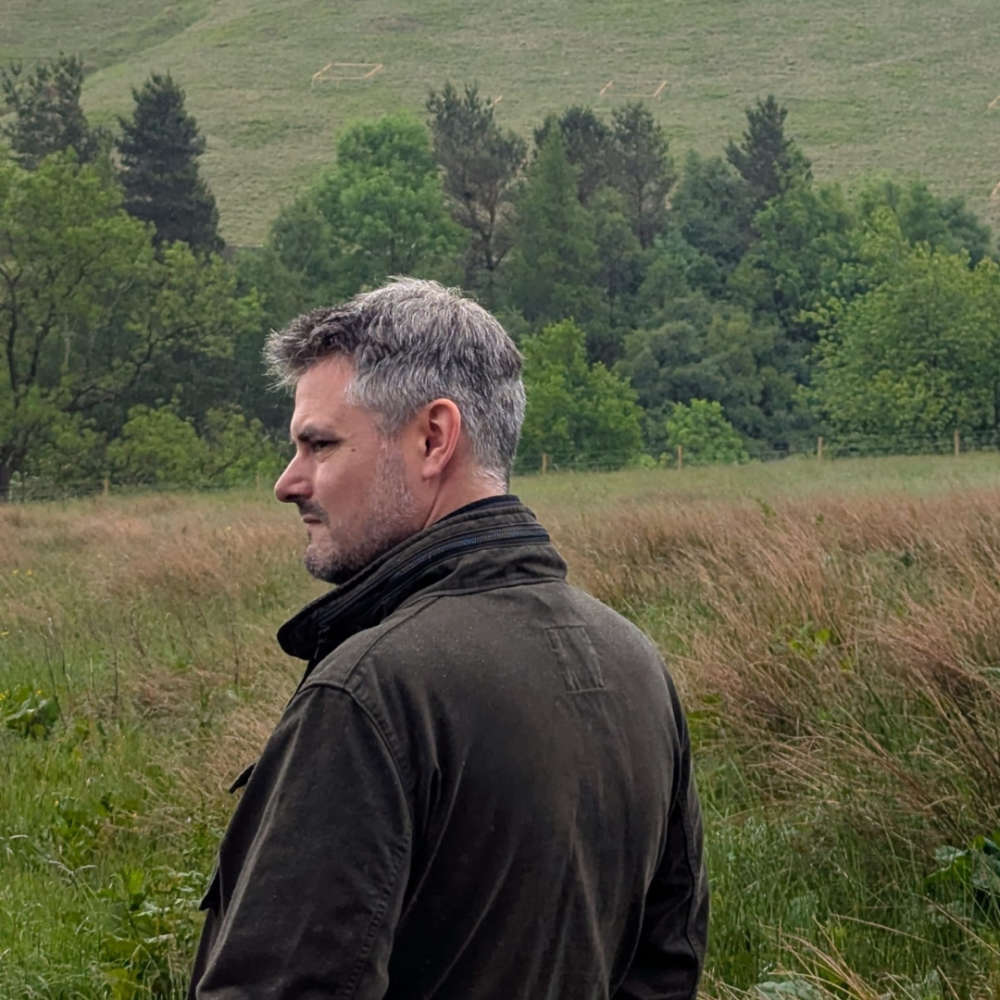
Jon Pearce has issued a statement on the Peak Cluster Carbon Capture Project.
His statement in full is as follows:
"I have had a few people get in touch with my office regarding the proposed Peak Cluster Carbon Capture project. I thought it would also be helpful to set my position out here on the consultation for those who have not written to me directly.
It is vital that the consultation is thorough and engages with all of the issues residents are concerned about. My constituents have a right to answers to all of their questions.
Sadly, the consultation thus far from Peak Cluster has not been as good as I believe it should have been. I have had several meetings with them and have stressed at every opportunity that they must engage with residents more closely. I will continue to meet with them and feed this back on your behalf.
As a result of Peak Cluster not engaging as well as I would have liked, this has led to a great deal of misinformation (deliberate or otherwise) being spread. I am deeply concerned about this as it is causing unnecessary anxiety for some residents. I am therefore keen to use this opportunity to provide reassurance where I can.
Firstly, producing our own cement is as important to our economy and sovereignty as steel. Cement is everywhere and we literally cannot live without it. The houses we live in, the buildings/factories/farms we work in and the roads we drive on would not exist without it. We have to protect our cement industry and make it viable long term.
By doing so we will protect 2000 local jobs that are vital to families in High Peak. The Peak Cluster project will also create new local jobs in the construction and management of the project.
If we do not safeguard our quarries we will be solely reliant on foreign imports. Not only will this see thousands of local jobs lost, but we will be more susceptible to global economic shocks – like the impact that the war in Iran has had on oil prices. Cement is fundamental to our economy and we cannot allow ourselves to be held hostage to world events.
At the same time, our cement and lime works produce 3 million tonnes of carbon dioxide per annum - over a quarter of all the greenhouse gas emissions in Derbyshire and Staffordshire. Therefore if we are serious about tackling climate change we have to find a way to stop those emissions polluting our atmosphere. We cannot just leave tackling climate change to other counties – we can and must play our part.
Unlike other major industries and emitters of greenhouse gases, the cause of these emissions is not the energy used in production – it is the chemical reaction required to produce the cement. So the solution isn’t cleaner energy. The only option is capturing the carbon dioxide and storing it.
I understand that all other means of collecting and storing the carbon dioxide have been thoroughly investigated and have been discounted as impracticable and/or unworkable – including liquifying and transporting by road.
Residents have also raised concerns that our topography creates safety challenges. Norway – a country with significantly more mountainous topography than the Peak District – has successfully used Carbon Capture Storage (including storage under the seabed) and continues to plan further projects.
The science behind the Peak Cluster project works. We know that the carbon dioxide storage sites will work because they are the natural reservoirs that stored gases for millions of years before we extracted them. This process simply refills them with a different gas. These reservoirs have enough capacity to store a gigaton of carbon dioxide.
This leads me on to another myth that I have heard being spread: that the amount of CO2 that can be stored and the length of time will be limited and the site will be full in anything from 3 to 30 years. This is untrue.
As I’ve said, the storage site is estimated to hold 1000,000,000 tonnes. The project hopes to capture, transport and store 3 million tonnes of CO2 per year, so that is only 0.3% of the total storage capacity. I’m not brilliant at maths, but that looks like the project has more than enough capacity for generations to come.
On the safety point, I want to be absolutely clear that I will not back anything that I am not convinced is safe. We are still at the consultation stage and the final decision can only be made after an exhaustive process has been completed – which includes the Health and Safety Executive signing off that it is safe. I will only make a final decision to back the project if those reassurances are in place.
It is worth saying that the use of these pipelines is far from new or experimental. Gas and liquids have been transported using pipelines for over 100 years in the UK. There are currently around 27,000km of high-pressure pipelines carrying both gas and fluids. Walk down most streets in High Peak and there will be a gas pipe under your feet. The practice is very well-established and robustly regulated - and the UK has a global reputation for safety in this field.
Similarly, carbon capture and storage (CCS) technology has been used since the early 1970s, so any claims that this is unproven or untested are false.
It’s also important to note that there has been some misinformation over the environmental impact of this pipeline. This project will involve digging a trench and once the pipe is buried no one should ever know it is there. One of the conditions of planning consent will be a Construction and Environment Management Plan (CEMP), which will be scrutinised by bodies like Natural England, the Forestry Commission and local planning authorities, including High Peak Borough Council. This will help ensure that the land will be restored to its original condition and the impact on nature will be minimised throughout construction. So there will be no long term impact to the environment as a result of the project. I believe the biggest risk to the environment would be to not deal with the long term impact of continuing to pump all those greenhouse gases into our atmosphere.
The Peak Cluster project has the potential to meet our climate change commitment whilst protecting thousands of local jobs and our sovereignty. There are those politicians and political parties who do not believe that climate change is real. They will obviously oppose this and any other project to reduce the emission of greenhouse gases. Whilst I fundamentally disagree with them, their position is at least coherent. But I am extremely disappointed by the lack of integrity of some local politicians who claim to care about the environment and tackling climate change but are seeking to exploit people’s understandable concerns and questions about the project and are opposing the best opportunity we have to play our part in tackling climate change.
I would stress once again that the project is still in its consultation phase, with planning consent not yet granted and the final route for the pipeline not yet agreed.
I hope this has been a useful explanation of the process being followed and what it will actually mean for our area. That being said, Peak Cluster must do better with their public engagement and consultation with residents. Whilst phase 1 of the consultation phase has now closed, you will have another opportunity to do so later this year and I would encourage you to share your thoughts then.
I will of course post details here of how to get involved when the consultation opens and, in the meantime, will continue to press Peak Cluster for more open public engagement."
 New rules at Greater Manchester tips spark fears of ‘passport-style’ queues
 Complaints made over Mottram bypass diversion
 Tameside and Stockport win awards for outstanding NHS CARE
 Glossop mum joins pioneering study into early breast cancer detection