

High Peak Borough Council is set to increase its share of residents’ council tax by 2.99%.
This decision comes as the Government has outlined extra investment for local authorities, with an assumption council tax precepts are expected to be increased to the maximum allowed.
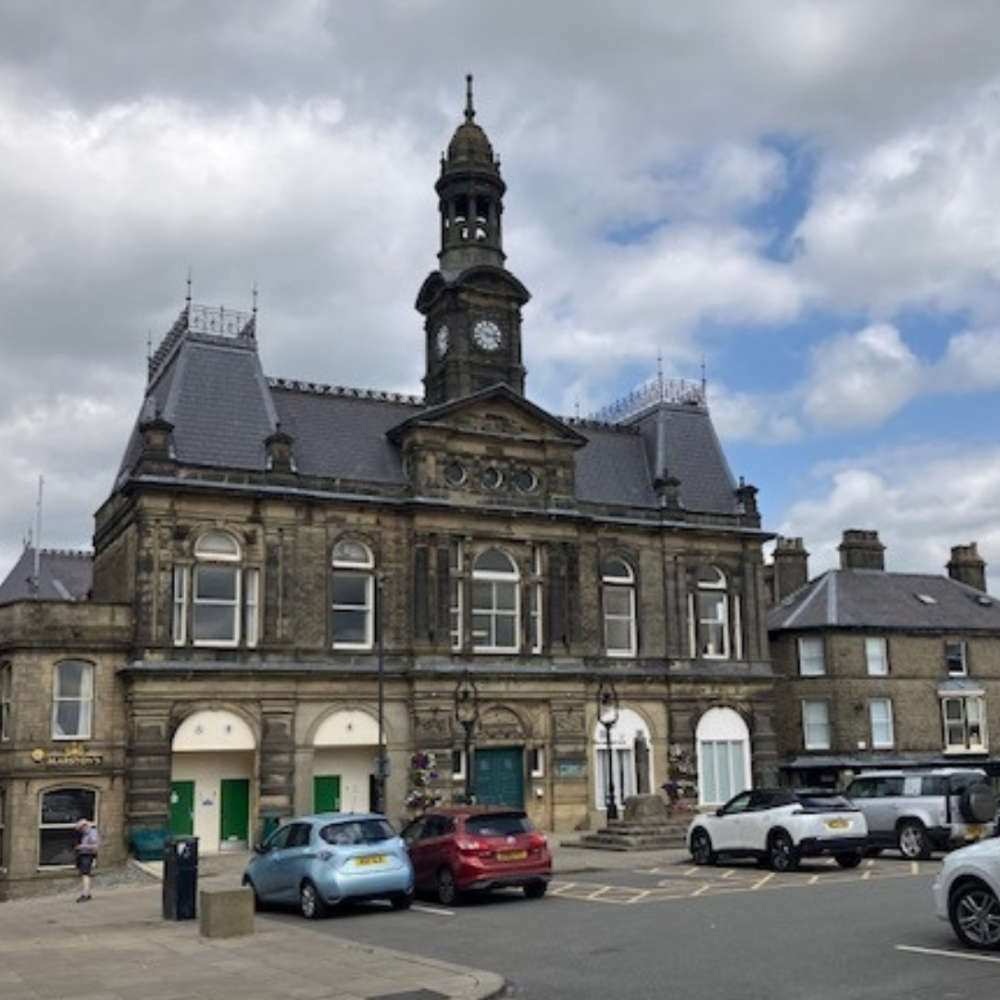
The Labour-controlled council’s Executive agreed at a meeting on February 12 at Buxton Town Hall, to recommend a 2.99% council tax increase for the 2026-27 financial year - equal to a £6.70 increase on a Band D equivalent property - for the council to finalise at a meeting on 26th February.
It also agreed to recommend a council home rent increase of 4.8% which is the level at which the Government restricted the 2026-27 rent increase for existing tenants, and is equal to a £4.62 increase for an average weekly rent giving a total average weekly rent of £99.48 by comparison with the previous financial year’s £94.86.
A council officer stated: ” The provisional Local Government finance settlement allows for up to a 3% increase in council tax. It should be noted that the Treasury’s published figures do assume all authorities maximise the increase to this level.”
The Labour Government has announced extra investment worth over £5.6bn over the next three years for local authorities, but it assumes as part of the deal that councils will increase council tax by the maximum of up to 5% for county councils and up to 3% for borough and district councils.
High Peak Borough Council is considering its council tax and rent arrangements as part of its Budget plans for 2026-27 and its updated Medium-Term Financial Plan for 2026-27 to 2029-30 alongside its Capital Strategy for 2026-27, proposed fees and charges and its proposed Procurement Forward Plan for 2026-27. All are overseen by Alan Barrow, Executive Councillor for Corporate Services and Finance.
Its budget report outlines a final General Fund budget proposal for 2026-27 providing for a net budget of £16,650,300 with a council tax increase of £6.70 on a Band D equivalent property or 2.99per cent providing a precept of £230.89 for the year.
Alongside the provisional Local Government Settlement, the Ministry of Housing, Communities and Local Government confirmed in December 2025, that for 2026-27 local authorities are allowed to increase the band D council tax charge by up to 3% without the need for a referendum.
The council’s budget report also stipulates the final Housing Revenue Account budget proposal for 2026-27 provides for a net budget of £18,434,350 based on a council home rent increase of 4.8% which is the level at which the Government restricted the 2026-27 rent increase for existing tenants.
High Peak Borough Council has based its calculations on the Government’s new multi-year provisional Local Government funding settlement as opposed to a previous one-year arrangement which had made planning more difficult.
It has also considered the impact of a reset Business Rates Retention Scheme and the prospect of the Government’s Local Government Reorganisation plans to merge county, city and borough and district councils to form single unitary authorities in areas like Derbyshire which could see the 2028-29 and 2029-30 financial years fall outside the life of the borough council.
The council also anticipates it will incur greater costs than originally considered in setting its Medium-Term Financial Plan last year due to funding cuts and the effects of inflation ‘drag’ on council budgets.
It also explained that despite the council’s pay award for 2025-26 being largely in line with the budget assumptions made for that year, the amount of Employer’s National Insurance grant funding the council received fell significantly short of the costs actually incurred.
The council also anticipates a pay increase of 3% in the MTFP for 2026-27 and 2.5per cent included for 2027-28 and after which the MTFP assumes a 2per cent pay award in line with the Bank of England target for Consumer Price Index inflation.
It says the council’s plans leave a balanced 2026-27 budget on both the revenue and capital side of its finances, but it expects greater uncertainty and risk in the MTFP for future years.
The MTFP includes an updated General Fund Capital Programme of £33,632,170 and an HRA Capital Programme of £37,670,780 over the period from 2025-26 to 2029-30, according to the council.
High Peak Borough Council’s Executive has also reviewed the council’s ‘Borough Plan’ to refocus it within the context of LGR and the remaining life of the authority. A council officer has stated: “The council is committed in the time it has left to playing the lead role in championing the local area.”
It aims to influence partners in key areas such as the provision of accessible health and social care, dealing with anti-social behaviour, pressing for more regular and faster rail links, better public transport and essential road infrastructure.
This includes the completion of the off-road route for the Trans-Pennine Trail and access to the Monsal and Tissington Trails, bringing in additional funding into the borough, ensuring benefits for High Peak from the East Midlands Devolution Deal and ensuring there is collective action on climate change.
The council’s MTFP report says the implications of LGR are being considered alongside this review to establish what action needs to be taken in the council’s remaining time.
It says a long-standing earmarked reserve of £500,000 remains available to support the implementation of the Efficiency Programme should investments be required.
High Peak Borough Council aims to carry adequate reserves as a contingency against risks that cannot be fully mitigated and a review, in reference to 2026-27’s income and expenditure, confirms that the existing minimum level of £1,576,800 remains sufficient.
The council says its HRA working balance is made up of surpluses that have accumulated over several years and the council retains a minimum of £3m to cover unexpected events that might trigger financial pressures and a review in reference to 2026-27’s income and expenditure confirms that an existing minimum level of £2,454,000 remains sufficient.
It identified a council tax requirement for 2026-27, or a Net requirement for council tax, or a budget requirement of £7,574,810 amounting to a necessary 2.99% increase in council tax which would provide a £230.89 payment from a Band D property.
The council also identified a Housing Rent requirement for 2026-27, or a Net Requirement from Housing Rents, of £17,680,360 amounting to a necessary 4.87% increase equal to a £4.62 increase resulting in an average weekly rent of £99.48 as opposed to the average weekly rent of £94.86 in 2025-26.
It’s Executive formally agreed to recommend a number of budget related matters, including the proposed increase in council tax and rent, which will all be considered at a Full Council meeting on February 26 when they are expected to be approved.
Recommended proposals also include approving the General Fund Budget for 2026-27, a revised Medium-Term Financial Plan for 2026-27 to 2029-30, Capital Strategy for 2026-27, fees and charges for 2026-27, and a Procurement Forward Plan for 2026-27.
Others include increasing Garage rents by 5% from an average per week of £9.11 to £9.57 and increasing by a maximum of 5% other charges including service charges, and noting the Chief Finance Officer’s view that the level of reserves are adequate.
The Executive also agreed to recommend changes to the working age Council Tax Reduction scheme from the beginning of the 2026-27 financial year from 1st April with the implementation of an Exceptional Hardship Policy.
These proposed changes aim to help applicants who receive Universal Credit, but who do not have any earnings, to receive the maximum level of support which means certain arrangements under previous support schemes can be disregarded when calculating entitlements.
The council’s Executive also gave an overall performance update for the council’s third quarter of the current 2025-26 financial year and the forecast financial position for 2025-26.
The forecast outturn for the General Fund Revenue Account for 2025-26 is
£15,746,690 which represents a forecast overspend for the year of £562,490 so a potential net use of the council’s earmarked reserves has been identified, giving an overall deficit of £47,250 before an increase in external funding resulting in a forecast surplus of £834,280.
Therefore, the General Fund provisional outturn for 2025-26 is forecast
as a £834,280 underspend against budget.
The council has also identified £219,900 in efficiencies so far in the 2025-26 financial year which exceeds the target set for 2025-26.
Provisional outturn expenditure on the Housing Revenue Account is £17,583,400 with an estimated income of £17,595,500 which represents a surplus for the year of £12,100.
Its revised General Fund Capital Programme budget for 2025-26 is nearly £17.5 million pounds as the provisional outturn forecasts a £7.593 million underspend compared to budget.
And the revised HRA Capital Programme for 2025-26 is £12.924 million and the provisional outturn is £10.064 million which is a forecast underspend of £2.860m compared to budget.
The overall council tax bill for Derbyshire residents includes an accumulation of numerous precepts determined by the county council and relevant local authorities including district or borough councils, parish or town councils and the police and fire authorities as part of their annual budget arrangements.
 High Peak residents face delay to weekly food waste collections
 Derbyshire Constabulary issue arrest warning after officer abused on Facebook
 Glossop Parish Church turns plastic tubs into charity funds
 Dark Peak Photo Festival returns to Glossop