

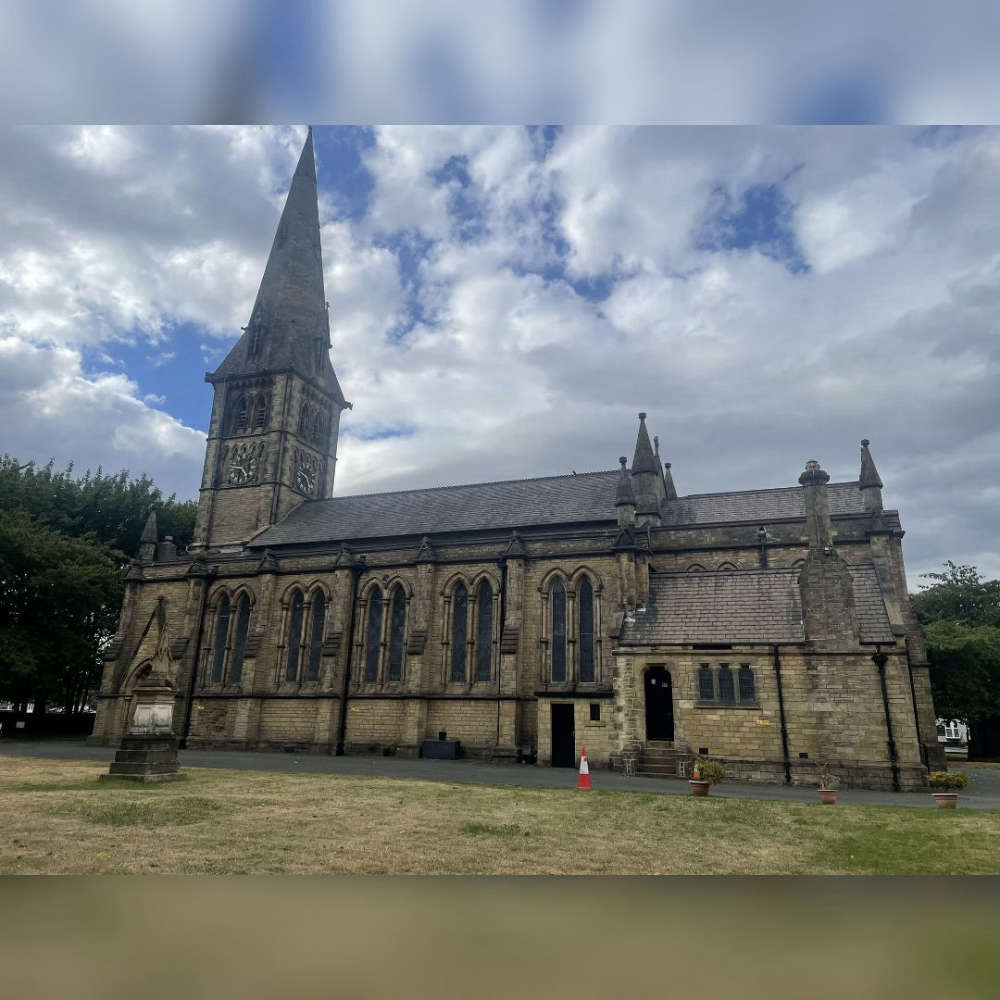
St Stephen's, a familiar landmark opposite Guide Bridge railway station, has been a place of Church of England worship serving the local community for 180 years
Taking just over 12 months to build, the church was consecrated and declared officially open by the Bishop of Chester on June 27, 1846.
Two years earlier, Robert Dyson, a lay reader from St Peter's, Ashton, reached out to the population on the other side of the Audenshaw boundary by starting a small Sunday School in a cottage. His mission work with local children grew quickly and within months, the first vicar, the Rev T.T. Eagar moved into the neighbourhood and began regular Sunday services in a pub. It was only temporary until a suitable site was found to build a permanent church.
The foundation stone of St Stephen's was laid on May 14, 1845 by Legh Richmond, site agent for the landowner, the Earl of Stamford. With seating for up to 700 worshippers, the church was built from sandstone in the popular 19th Century 'Gothic revival' style at a cost of £3,000.
Within ten years, the church spire was added from funds raised by the parishioners. In 1889, bells were installed in the tower and on November 14 that year, at precisely 12 noon, the vicar set in motion the church clock.
The chancel and vestry completed in 1899-1900 are the most recent addition to the Grade Two listed church seen daily by walkers, motorists, passengers travelling through Guide Bridge station and narrow boaters on the nearby Ashton Canal,.
St Stephen's School facing the church on Audenshaw Road opened in 1863, followed by Hooley Hill School on Denton Road built in 1879. Church services for this outlying area of St Stephen's parish continued to be held there until 1924 when the separate parish of St Hilda's was created with a new church on the Denton boundary.
Fast forward to the 2020s, the Church of England in Audenshaw has now come full circle with the Rev Amy-Elizabeth serving as the vicar of both churches.
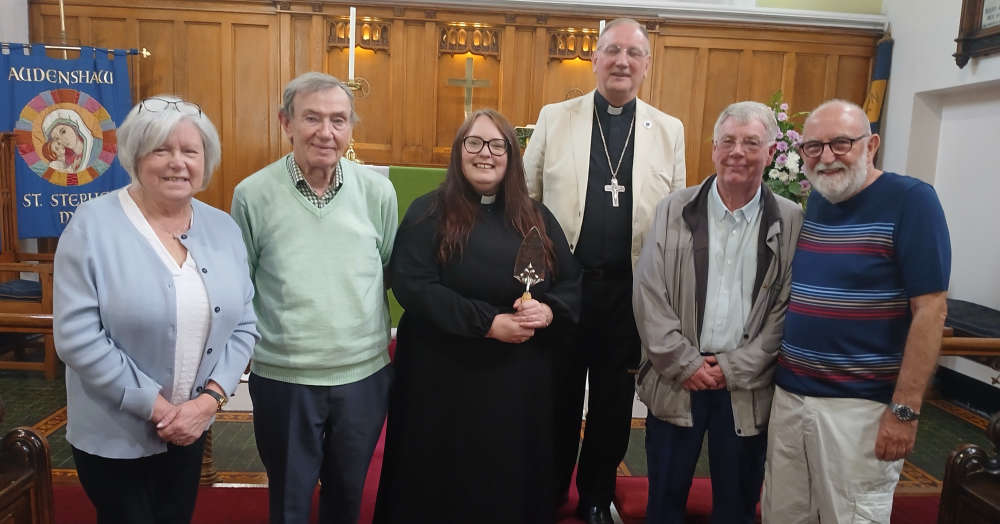
To mark the 180th anniversary, the church 'family', together with friends past and present and special guest Bishop Mark Davies enjoyed a celebratory afternoon tea. St Stephen's historian Allan Arrowsmith gave a short talk and showed the beautifully inscribed silver trowel which was used at the laying of the foundation stone in 1845. Carefully preserved by a parishioner, it was then handed down through several generations before being returned to the church some years ago.
Looking ahead to September, St Stephen's will once again be welcoming visitors to their annual National Heritage Open Days exhibition. Regular services are Sundays at 11am and Wednesdays 6.30pm. Details of activities for children and other groups are posted on the church Facebook page.
 The latest attacks on suspected HMOs in Tameside
 Tameside leaders unite in condemning criminal damage
 Mossley Farmer’s Market is moving to George Lawton Hall this Sunday
 CHESS plays a Masterstroke at The Plaza