
Walking, wheeling and cycling in Greater Manchester is saving the NHS more than £45 million every year, the equivalent of over one million GP appointments, according to the UK’s largest ever assessment of active travel.
The findings come from Greater Manchester’s Walking and Cycling Index 2025, launched today by Walk Wheel Cycle Trust and Transport for Greater Manchester.
The report shows that walking, wheeling and cycling are already improving people’s health and helping to create more liveable communities across the region. It also highlights strong public backing for streets and neighbourhoods designed around people rather than cars.
Health, savings and stronger communities
Across Greater Manchester, active travel is delivering significant health, economic and social benefits. More than half of residents say they can easily reach many of the places they need without driving.
However, the Index also shows that many people still face barriers to travelling actively. More than three quarters (77%) of residents surveyed would like pavements to be more accessible, while 75% want more road crossings to make walking and wheeling easier. Meanwhile, 76% support improving and increasing local off-road walking, wheeling and cycling paths.
Safety remains a concern, with fewer than half (45%) of residents saying they think it is safe for their children to walk and wheel in their community.
Jonah Morris, Growth and Partnerships Manager for the North of England at Walk Wheel Cycle Trust, said: “Greater Manchester is already a region where walking, wheeling and cycling are becoming part of everyday life, and this new report shows the difference they make to the people that live right across the ten boroughs.
“It shows strong public support for neighbourhoods designed around everyday journeys, that can be made easily on foot, with a wheelchair or by bike, whilst highlighting some concerns around safety and infrastructure.”
A parent’s perspective
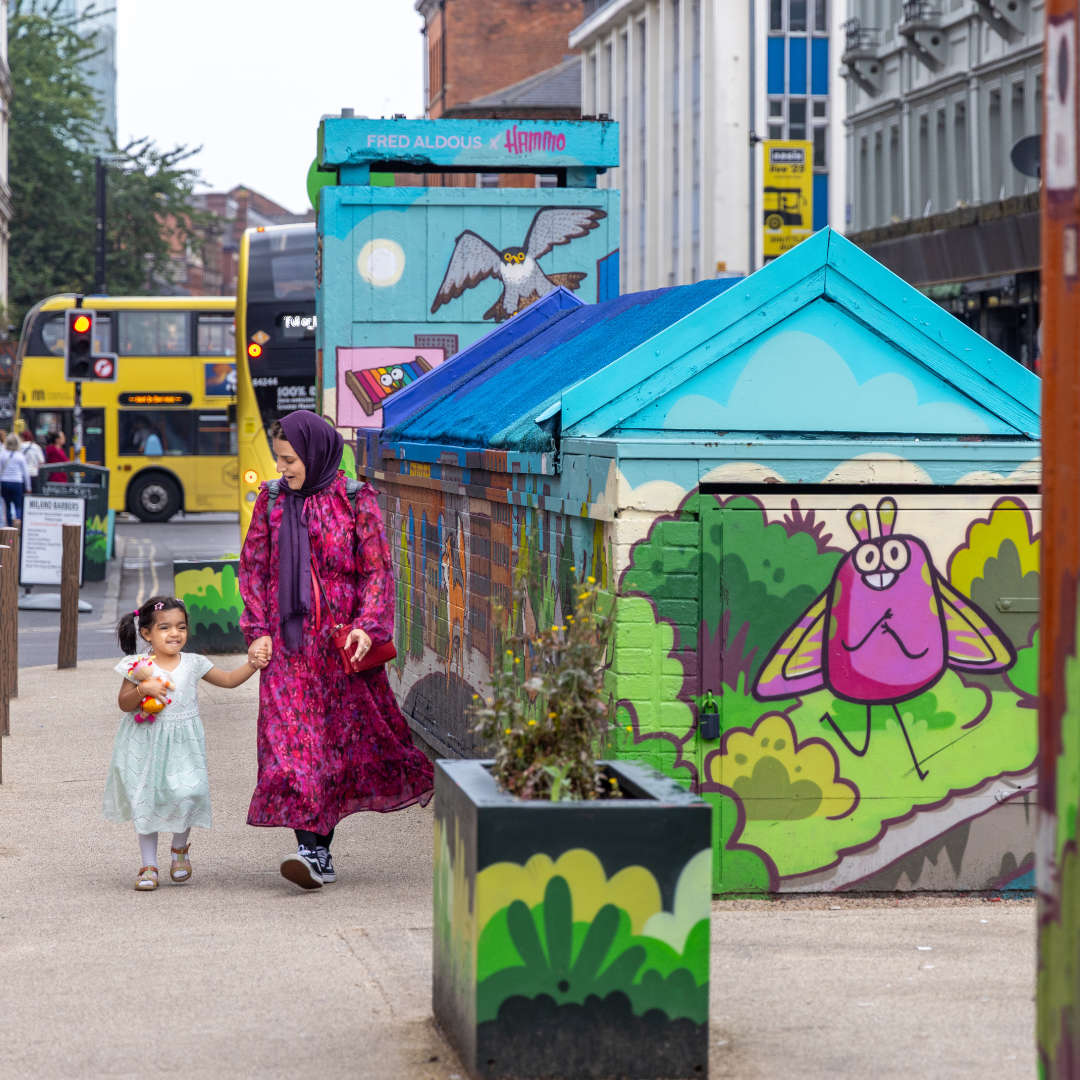
For Rabiya, who lives in Greater Manchester, accessible public transport and pedestrian-friendly streets mean she and her daughter can make more active journeys.
She said: “I’m a car user, but I enjoy walking, green spaces are good for your health. Consistent public transport helps; we get the train into Manchester city centre and hop on the free bus or just walk around.
“It’s easier to walk with the buggy in the city centre – it’s very pedestrianised and the edges of the pavement aren’t uneven.
“My daughter loves going outside, walking just calms her down and there’s a lot to learn from being outdoors. She’s very inquisitive, she likes pointing out the yellow buses. So, I think making the surroundings more visually appealing with public artwork is great.”
Her experience reflects wider findings in the Index, which shows that while many residents are embracing active travel, improvements to infrastructure could unlock even greater benefits.
School Streets success in Denton
The Greater Manchester Combined Authority is taking action to tackle some of the concerns raised, with new projects aimed at making walking, wheeling and cycling safer and more accessible.
One key target is for 70% of primary school pupils to walk, wheel, cycle or scoot to school by 2030. Initiatives such as School Streets, where motor traffic is restricted outside schools at drop-off and pick-up times, are already making a difference.
At Russell Scott School in Denton, a School Street initiative has been running for three years.
Headteacher Steve Marsland said: “The School Street has been a game changer. Blocking off the roads around school means families are walking, scooting and cycling.
“Parents are really enthusiastic and have told us that they talk more and spot things walking to school that they would never come across whilst driving. We started to change the culture of the school run by advising parents and carers about the benefits of active travel and the right of all children to clean air.
“The children are the best advocates of School Streets - give them a voice because it’s about them and their health.”
Supporting the Bee Network vision
Dr Richard Nickson, Network Director: Active Travel at Transport for Greater Manchester, described walking and cycling as the “glue” that connects the public transport system.
“It’s wonderful to see that the Index shows strong public support for sustainable transport and improved neighbourhoods, reinforcing Greater Manchester’s commitment to the Bee Network: an affordable, safe, accessible and frequent public transport network with walking and cycling embedded,” he said.
The Walking and Cycling Index in Greater Manchester is a partnership project between Walk Wheel Cycle Trust and Transport for Greater Manchester. The report is designed to support local and national decision-makers by providing robust evidence on what is working, and where further action is needed, to help more people choose to walk, wheel or cycle for everyday journeys.
A digital version of the report can be downloaded at: https://www.walkwheelcycletrust.org.uk/walking-cycling-index/greater-manchester
 Man wanted in connection to theft
 Three arrests made after Dukinfield stabbing
 Town hall boss urges peace as local families left in fear for loved ones
 United Utilities to carry out sewer repair works on the A663 in Chadderton