

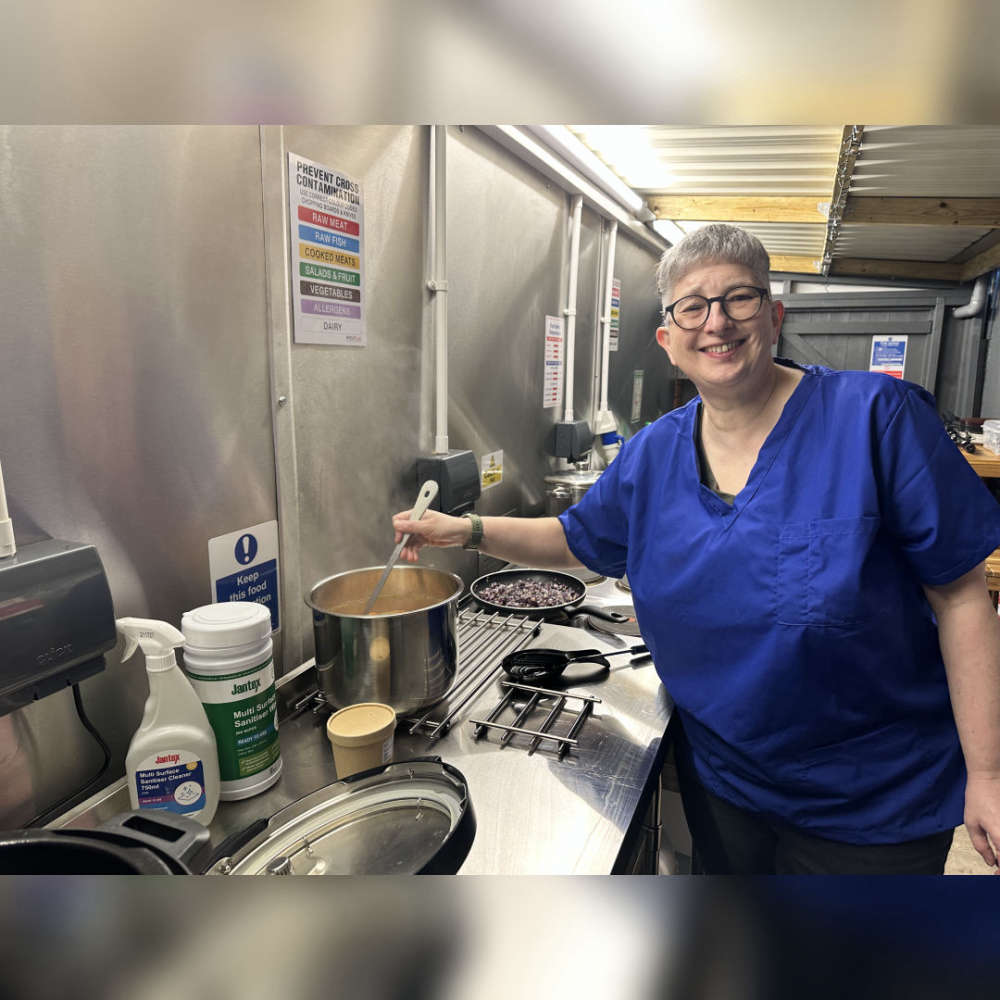
A few weeks ago, the future of Thompson Cross Community Kitchen hung in the balance. A routine visit from Environmental Health had left volunteers anxious and unsure whether their small, outdoor cooking space could survive the jump to full compliance with food safety regulations.
What inspectors saw was a modest outdoor kitchen built onto the side of a house, one wall a fence, another a gate, a house wall forming the third side and a gazebo roof overhead. It had grown organically out of a community project rather than a formal building plan. The verdict, however, was clear. If the kitchen was to carry on serving the community, it would have to function like an indoor, fully enclosed commercial space. In practice, that meant turning what was essentially a covered yard into a sealed “box” where pests, weather and contamination could be kept out.
For founder Julie Mallinson and her team, the demands were daunting. There was no budget set aside, no pot of grant money waiting in the wings. The kitchen itself had sprung from an earlier success after winning an award in the summer, the group had simply wanted to do more with surplus food from their community pantries. They knew some pantry users were taking home ingredients they did not know how to use, while more unusual vegetables celeriac, parsnips, purple carrots, raw beetroot, often sat unwanted on the shelves. The kitchen was their answer a place to show people how to turn unfamiliar produce into hearty meals, even when they had only a hob and a basic worktop to hand.
“We’ve been running community pantries for the last three years,” Julie explained. “Sometimes people get food off the pantries that they don’t know what to do with and sometimes there’s food left that’s just going to waste because it’s a bit different. We wanted to be able to say, ‘Here’s what this is, and here’s how you can cook it.’”
The project was also about inclusion. Many of the people who come through the door live in supported accommodation or only have access to a microwave and a hob. The kitchen itself reflects that reality. There is no gleaming bank of ovens, no expensive gadgets. “This kitchen doesn’t have anything more than a hob,” Julie said. “We don’t even have a microwave in here, and we’re teaching people that even just with a hob you can do so much.”
So, when Environmental Health effectively asked them to rebuild, the team were, in Julie’s words, “flabbergasted”. They understood the need for safety. They could see why inspectors wanted a fully enclosed space where nothing could get in. But without a budget and with only a handful of existing supporters Robertsons, RMD Electricals and Crescent Roofing had already stepped up to help with the roof, the scale of the challenge seemed impossible.
Then the community stepped forward.
In the three weeks since that tense inspection, a quiet transformation has taken place on the side of Julie’s house. It began with a single volunteer who donated £50. On paper, it was a modest sum. In reality, the team knew it represented a real sacrifice. “Although that is a small donation in a lot of ways, his donation has significantly made a difference,” Julie said. “We know he would struggle to give that £50.”
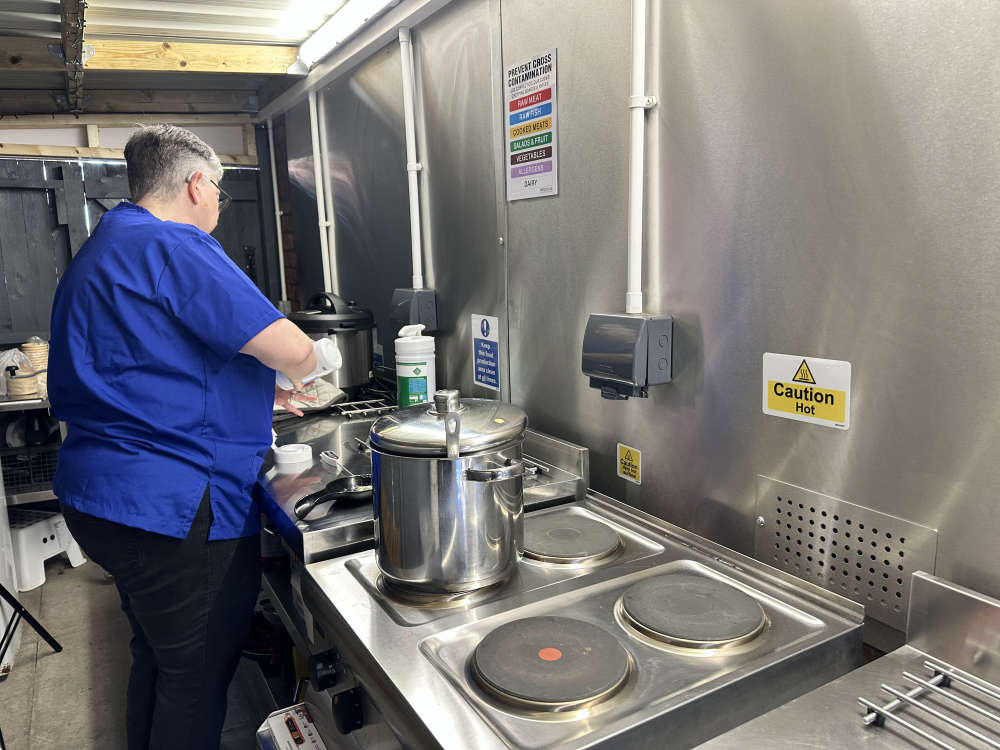
The second gift came from a neurodiverse group in Mossley, who see themselves as unapologetically welcoming and inclusive – values they recognised in the kitchen itself. They contributed £400, money that was immediately put to practical use. One of the first purchases was a sturdy new table to lower the cooker. Previously, the hob sat too high, making it difficult and dangerous for both children and adults to use. The kitchen regularly hosts home-educated children and young people, and volunteers had been concerned about working at height around hot pans. With the table in place, the cooker is now at a safe, accessible level for everyone who comes to learn.
The third donation came from a group of local business people who prefer to remain anonymous. They have given what Julie describes simply as “a lot of money” enough that she has been asked not to disclose the figure. Their generosity has reshaped the kitchen and secured its future in ways the team could only have dreamt of a month ago.
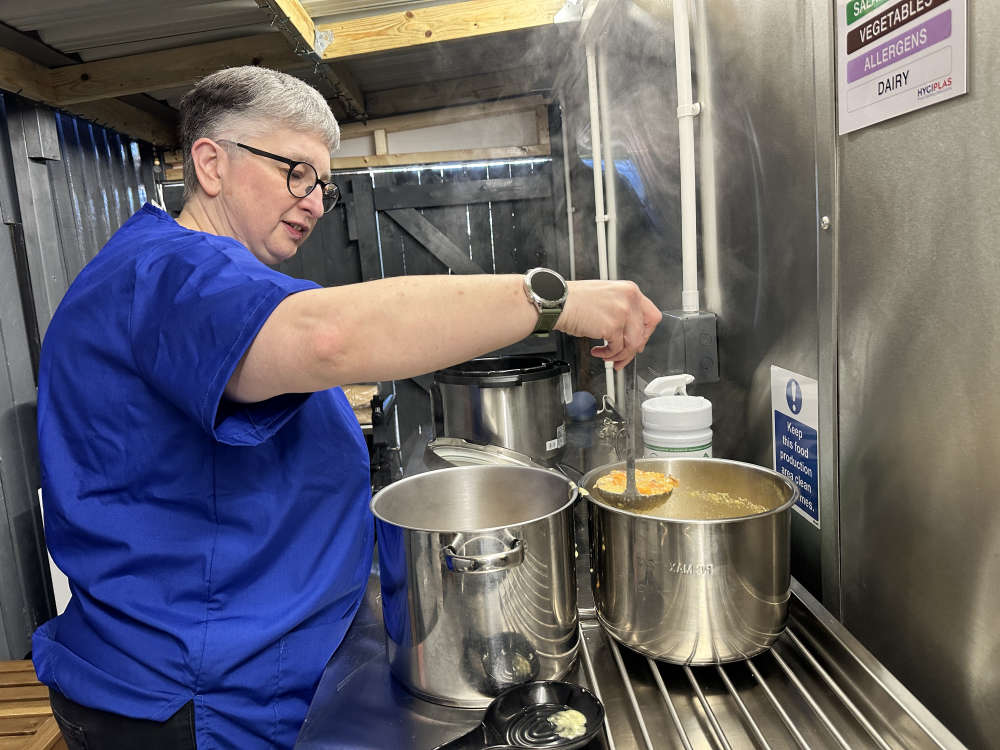
Stepping into the rebuilt space today, the changes are striking. The once-exposed back wall is now clad in high-quality stainless steel, provided and fitted by a local engineering firm that donated its labour and materials. The finish is the kind you would expect to see in a high-end commercial kitchen, not in a community project tucked beside a family home. The wall has also been properly fitted with air vents to prevent damp in the adjoining house. The structure now runs right up to the ceiling of the covered area, answering every concern Environmental Health raised about enclosing and protecting the food preparation zone.
“It’s such good quality and it’s just amazing,” Julie said, looking around at the gleaming surfaces. “This is the quality of a commercial kitchen, a high-end commercial kitchen, so we’re really excited. It’s what Environmental Health said we needed to do.”
The improvements do not stop at the walls. The entire end of the kitchen has now been fully covered, further sealing the space from the elements. The team have yacht-varnished the ceiling and repainted all the walls, giving the room a clean, bright, professional feel. A new towel holder is in place, and they are expecting a commercial mop and bucket set to arrive, small details, perhaps, but essential in a regulated food environment.
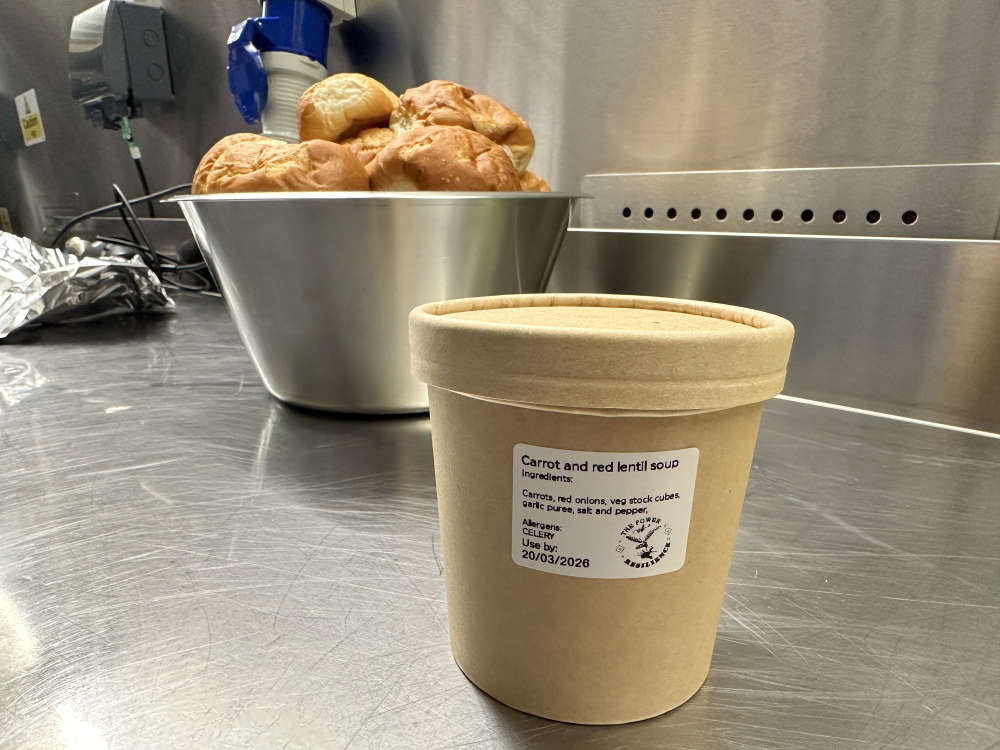
On a shelf sits another quiet revolution, a label printer linked to a phone app. Every soup and prepared meal can now be labelled with a full list of ingredients and allergens, making it safer for people with dietary needs and bringing the kitchen into line with modern food labelling standards.
Sustainability has been woven into the redesign. A water butt collects rainwater from the covered roof, reflecting the project’s emphasis on recycling and renewing wherever possible. At the back, recycling systems are in place for waste, underscoring the message that thoughtful use of resources runs from the ingredients on the chopping board to the rubbish going out the door.
While the physical changes are impressive, perhaps the most significant development is a human one. The anonymous business donation is large enough to fund a member of staff for two years. Working for 30 hours a month, this new team member will not just cook for the community but will train others to cook to a higher standard, young people, volunteers, staff and local residents alike.
“The aim isn’t that they’re going to be cooking,” Julie explained. “It’s that they’re going to be training us up to cook to a higher standard. The aim is to train up the kids, train up us as staff members and also train up members of the community. Then we get the skills and we pass those on to other people.”
Already, the ripple effects are visible. A 14-year-old Duke of Edinburgh Award candidate is due to join the team this afternoon to gain experience in the kitchen. A new volunteer, just starting a catering course at Tameside College, has also come forward after seeing coverage of the project. For Julie, this is a powerful demonstration of how local media can amplify community stories and draw in fresh support.
“Crikey, the power of the media,” she laughed, acknowledging the role that recent publicity has played in connecting the kitchen with donors, volunteers and well-wishers.
At the heart of it all is a simple idea, that food can bring people together, build confidence and reduce waste. By demystifying unusual vegetables and showing people how to cook healthy meals with only the most basic equipment, the Thompson Cross Community Kitchen is quietly reshaping how its neighbours think about ingredients, cooking and community.
Looking ahead, the team are determined that the next two years of secured staffing will mean two years of “feeding our community, believing in our community, levelling up and scaling up.” With the major structural hurdles overcome and Environmental Health’s recommendations met, they can now focus on what they set out to do in the first place – helping people cook, eat and learn together.
To those who stepped in when things looked most precarious, Julie has a simple message. “We just couldn’t do this without you,” she said of the anonymous business group. “Thank you for listening, thank you for hearing us, thank you for believing in us and for believing in this community.”
For anyone wanting to get involved, the door is very much open. The Power of Resilience team, who run the kitchen and the wider project, are active online at www.thepowerofresilience.co.uk and on social media under www.facebook.com/ResiliencywithGod
They have just launched a new weekly drop-in every Tuesday from 3pm to 5pm, where residents can come down, share food, chat with the team and find out how they can play their part in the kitchen’s next chapter.
If the past three weeks are any indication, this small space on the side of a house is fast becoming a big symbol of what can happen when a community refuses to let a good idea go – and when people, businesses and volunteers choose to stand together rather than stand back.
They now patiently await the follow up inspection.
 ‘Has Bridge Got Talent?’ Auditions announced for Bridge Fest 2026
 Inspirational peace activist visits Rayner Stephens High School
 Over £14,000 raised for Willow Wood Hospice in Enterprise Challenge
 ‘Daffo-Kill’ Dangers: Dogs Trust Manchester warns owners to keep pets safe this spring
