

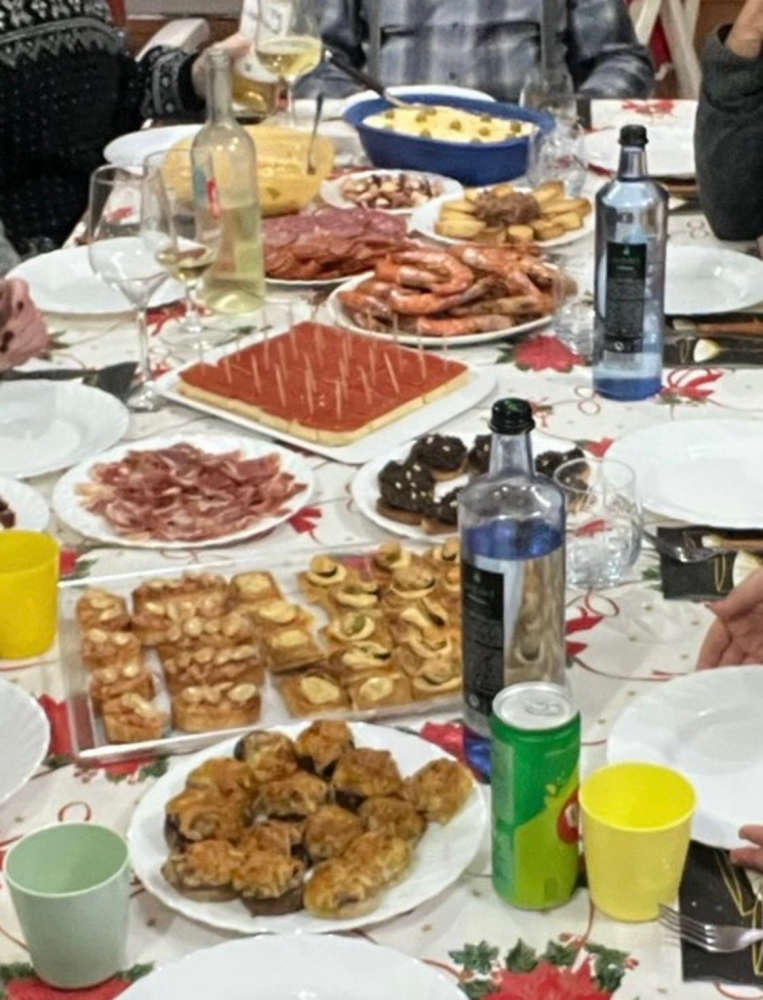
On Christmas Eve, a lot of my friends go out drinking. Others frantically prepare uncountable sides and desserts ahead of the big day, or cajole their kids into bed so they can fill their Christmas stockings unobserved.
But in my household, Christmas Eve is part of the main event.
Like thousands of families across Greater Manchester and beyond, I celebrate my Christmas a day early. And it’s not (just) because we’re too impatient to wait until Christmas morning to open our presents.
Christmas on the 24th is part of a lot of European and South American traditions. Especially in Central European, Scandinavian, and Eastern European countries, it’s usually more important than Christmas Day.
Lots of families with roots in different countries see Christmas traditions as a way to connect with their heritage. And celebrating early – or multiple times – comes with its unique benefits and challenges.
“It was very helpful with divorced parents,” Anna Clee, 26, joked to the LDRS. The Computer Science PhD student used to spend Christmas Eve with her German mum and Christmas Day with her English dad. “No arguments, because everyone gets their special day!”
Germans celebrate Heiligabend (holy evening), with a Christmas tea instead of lunch.
“Food is very much the main event for our English Christmasses,” Anna said. “Whereas I think in Germany it’s more about spending time with family.”
Santa doesn’t exist in Germany. Gifts come directly from your relatives, or from the ‘Christkind’ (literally Christ-child). (There is, however, a Saint Nicholas who arrives on December 6 and fills kids boots up with nuts, tangerines, and chocolates.)
The meal can also be quite varied, but tends to be some kind of meat – often pork, duck, or deer – with spiced red cabbage and roast potatoes. And there’s a widespread culture of competitive Christmas baking.
“When a Lidl opened up locally to where my mum lived, that was a gamechanger,” Anna went on. “I know people just see it as a bargain store now, but back in the day, that meant access to traditional German food that we couldn’t usually get. Lebkuchen (a type of gingerbread), Zimtsterne (cinnamon stars).”
Celebrating a day early is not always a convenient arrangement, however. When Ludwik Lipiec, 23, (pictured below) worked in the hospitality industry, he says he had to ‘really fight’ to get the 24th off from his employer.

“The 24th is definitely the main event for us,” said Ludwik, who has Polish roots and is now an apprentice content creator for the LDRS.
Ludwik moved to the UK when he was five years old. He’s the only one of his siblings who still remembers celebrating Christmas in Poland. Keeping
the traditions alive is a powerful way to stay connected to his country of birth.
He said: “In Poland and a lot of Europe Christmas is done sort of ‘in reverse’ compared to the UK. Here, the advent period is when everyone gets their tree up and the decorations going, and as soon as Christmas is over it all comes down. For us, the decorations go up on Christmas Eve and stay for a few weeks in January.”
This includes decorating the tree with baubles made of gingerbread – though Ludwik’s family are far from traditionalists.
“Daleks and Scoobie-Doos frequently make it onto our tree,” he revealed.
In Polish tradition, the Christmas meal is a 12-course affair, and different regions of Poland have different dishes. Ludwik’s (pictured below) is a mixture – with his mum from Poland’s mountainous Zakopane region, and his dad from central, urban Poland.
But one thing that unites them is the main dish – which isn’t turkey, but carp.
“It’s usually my job to prepare the big fish,” Ludwik said. “There’s a funny tradition that’s almost gotten me in trouble once. When we’re preparing the carp for the coming year, it’s seen as good luck for your finances to keep one of the scales in your wallet.
“Once later in the year, I went to a club, and they did a pat down search of everyone. They find this strange looking disk in my wallet, in a very suspicious-looking bag… and I have to stand there and explain that this is a fish scale for Christmas, it’s not drugs!”
Dorota Zak, who runs a Polish weekend school in Oldham, also celebrates on the traditional Polish day of the 24th – known as Wigilia in Poland.
“When we can see the first star in the sky, we sit down at the table and the most important thing on the table is the straw underneath the table cloth
because of its religious connotations,” she explained. “We put the holy communion bread on top, which has been blessed by the priest.
“We spend some time praying, including prayers for the people in our family who have died. We also set an extra plate on the table, which symbolizes someone who is travelling, who might knock on our door for hospitality, or our departed loved ones.
“Then we take the bread and we share it with everyone, and when we break bread with each person, we make a wish for that person – so we might wish them a successful new year, or that they pass their exams, get a new job.”
Dorota was preparing dumplings for her twelve course meal just as I called. Her family also eats mushroom soup, fish, borscht – a beetroot soup, and sour cabbage, along with a special sweet rice dish with dried fruits. There’s no alcohol allowed during the day until the family has been to mass – which is usually at midnight. For Dorota, the culture is intertwined with her religious beliefs.
“My tradition is my family. This is my religion. This is me,” she said. “This is how my parents raised me to love God. Jesus is born in our hearts every year and it’s also an opportunity for us to become better people. This is what I’m trying to teach my children through our Polish traditions, even though they were born here, and this is home for us now.”
There’s only one tradition Dorota has borrowed from the Brits: the family now opens their presents on Christmas Day.
But many households end up with a bit of a melange of different cultures and traditions. In my household, which is a mixture of four different heritages, including German, we celebrate a ‘symbolic’ European Christmas on the 24th. This usually involves a Christmas dinner, a fire in the garden, and the exchange of a single gift.
Then, because we’re greedy, we do it all again the next day.
We’re not the only ones doubling – or even tripling – our Christmases.
Jose Martinez is originally from Spain but has been living in the UK for more than 20 years. He and his partner tend to celebrate Christmas in the UK and then celebrate Dia de Los Tres Reyes Magos (Three Kings Day) in Spain on January 6th.
December 24th is an important part of the Spanish festive season – which lasts around two weeks. Traditionally, it involves a dinner and a visit to midnight mass, while the 25th is a ‘rest day’ more similar to boxing day in large parts of the country.
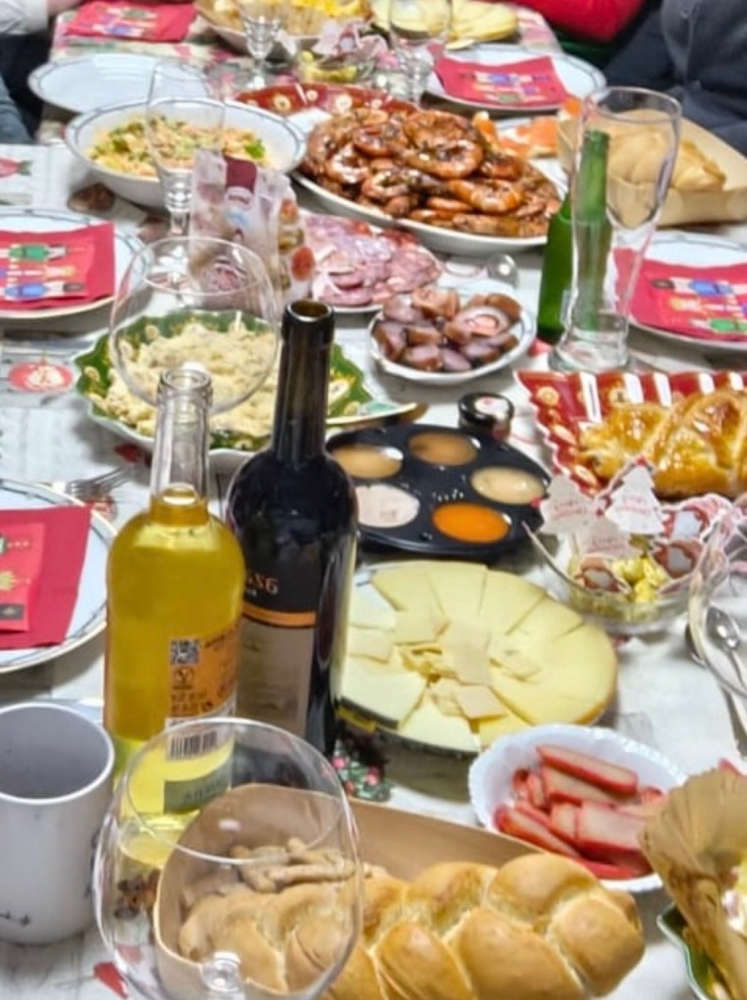
Pictured above: Jose Martinez - Spanish Christmas. Credit: Jose Martinez .
“The 24th was never a big celebration for us, it’s more just a quick dinner. When I was younger, we used to go to midnight mass. But we don’t really do that anymore,” Jose said. “But me and my partner have a different tradition: a beige buffet. On Christmas Eve, we can eat only brown foods: sausage rolls, deep-friend things – all the healthy stuff!”
Jose says he’s embraced the British Christmas experience.
“I had to get used to the turkey,” he admits sheepishly, quickly adding: “My partner has made some brilliant turkey, but before that…my experiences weren’t great. Apple cider was also a culture shock for me. In Spain we serve it like Champagne on special occasions like Christmas – in flutes, and champagne bottles. So imagine my surprise when I was served it in a pint glass!
“But I love British Christmas. You get pigs in blankets, brussel sprouts – I know it’s controversial, but I do like them.”
In exchange, the sixth of January is a truly Spanish experience.
“Spanish Christmas is more small dishes to start with – not tapas! For the main event, my family does a roast with a bird within a bird within a bird, which is very popular. Traditionally, it’s lamb, but it differs between families.”
Dessert is traditionally La Rosca de Reyes, a ring of sweet bread that’s cut in half and filled with cream. Within the filling there are ‘little surprises’, Jose explained, such as rings or miniature statues.
There’s also a dried bean. If you get the dried bean in your piece of cake, then you have to pay for the dessert the following year.
“It’s quite similar to English Christmas other than the date and the food,” Jose said. “The only bummer is that if it’s a weekday the next day, everyone has to go back to work or school. They don’t get a day off to enjoy your new toys.”
 Derker community group recognised for support of Vulcan partnership work
 Second man arrested in connection with Manchester Mosque incident with local councillors expressing shock
 Council pushed to do more to support residents without internet access
 Man wanted on recall to prison