
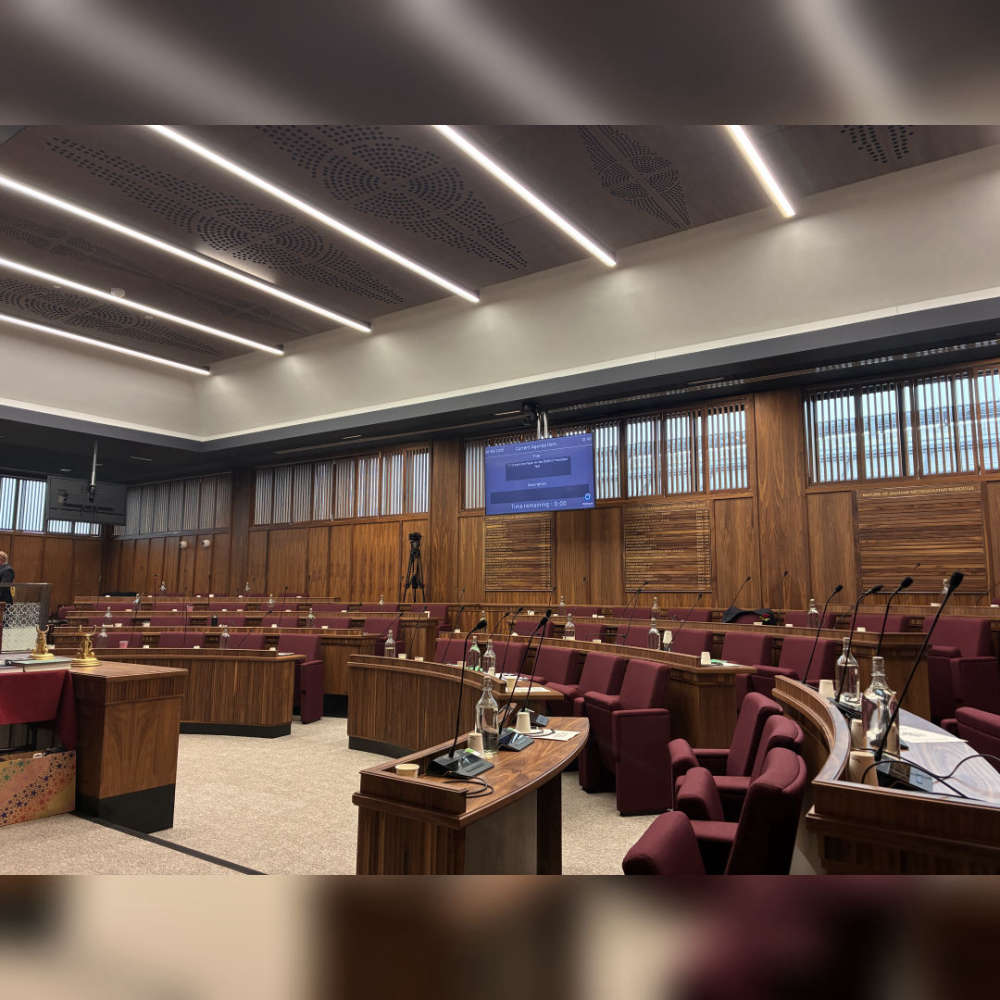
Oldham could be on the verge of a turning point after weeks locked in political stalemate.
The local authority has been left ‘ruderless’ ever since councillors failed to elect a council leader following a political shake-up during the May local elections, leaving no group with more than a third of councillors.
For the past six weeks, the council has officially been ‘breaking the law’ as it continues to operate without a political leader. Meanwhile several attempts to find a resolution have descended into shouting matches across the council chamber.
Now the local authority could be on the verge of a stop-gap solution that could put the council on a more functional footing – but only if enough councillors agree to the deal at a full council meeting on Wednesday, September 16.
The new arrangement will see responsibilities split across all six political groups in a way that reflects the makeup of the council.
The leaders of the four biggest groups – Labour (18), Reform UK (16), the Oldham Group (10), and the Lib Dems (6) – will each become the boss of the four crucial areas of the council. These are: Resources (Lib Dems), Place (Labour), Children and Young People (Reform), and Health and Adult Care (Oldham Group).
However, the deal is meant as an ‘interim’ arrangement, with groups still asked to meet once a month to try to agree on a long-term leader. In the meantime, these council bosses won’t have any executive powers – meaning they won’t be able to embark on any ambitious new schemes or direct officers.
If agreed at full council, the temporary system will mean the council will no longer be breaking the law. It would also see some form of normality return to the council in that meetings – which have largely been on pause since May – will be able to resume.
Currently, all decisions are being delegated to council officers and published online after the fact. Elected members and the public have been unable to weigh in in the same way they usually would, meaning much of the council’s business is taking place behind closed doors.
While much of the executive power would remain with the council’s CEO, the proposed system would allow for greater political and public scrutiny of the decision-making process, according to a report published on the full council’s meeting agenda.
Chief executive Kipling said: “The proposals being considered this week represent a strengthening of the governance arrangements already in place. They provide greater transparency, stronger democratic oversight and clear political engagement, while ensuring decisions can continue to be taken effectively and in the best interests of Oldham.
“This has been a result of significant work and co-operation between the group leaders, who I would like to thank for their efforts to get us to this place. Whilst no replacement for the leadership model we are intended to have, this is a step in the right direction.
“Residents can be reassured that services are continuing, statutory responsibilities are being met and robust safeguards are in place to support the Council’s ongoing work.”
This is not the first time a potential resolution has been proposed for the leadership deadlock. However, sources within the council say they are ‘quietly confident’ the temporary governance structure will receive the go-ahead from enough council members across the political spectrum.
If it fails, group leaders will be asked to go ‘back to the drawing board’ until they can come up with a working arrangement.
The question remains over who will ultimately take the reigns for the council some have long called ‘ungovernable’. Unless an agreement is reached, residents in the borough may have to wait until the local election in May 2027 before there’s any chance of a new boss for Oldham Council.
 Mahdlo Youth Zone and Oldham Theatre Workshop launch new theatre partnership
 Reform leader steps down
 Golf club set to host charity event
 The plan to help 90,000 kids in Greater Manchester travel to school trips for free