

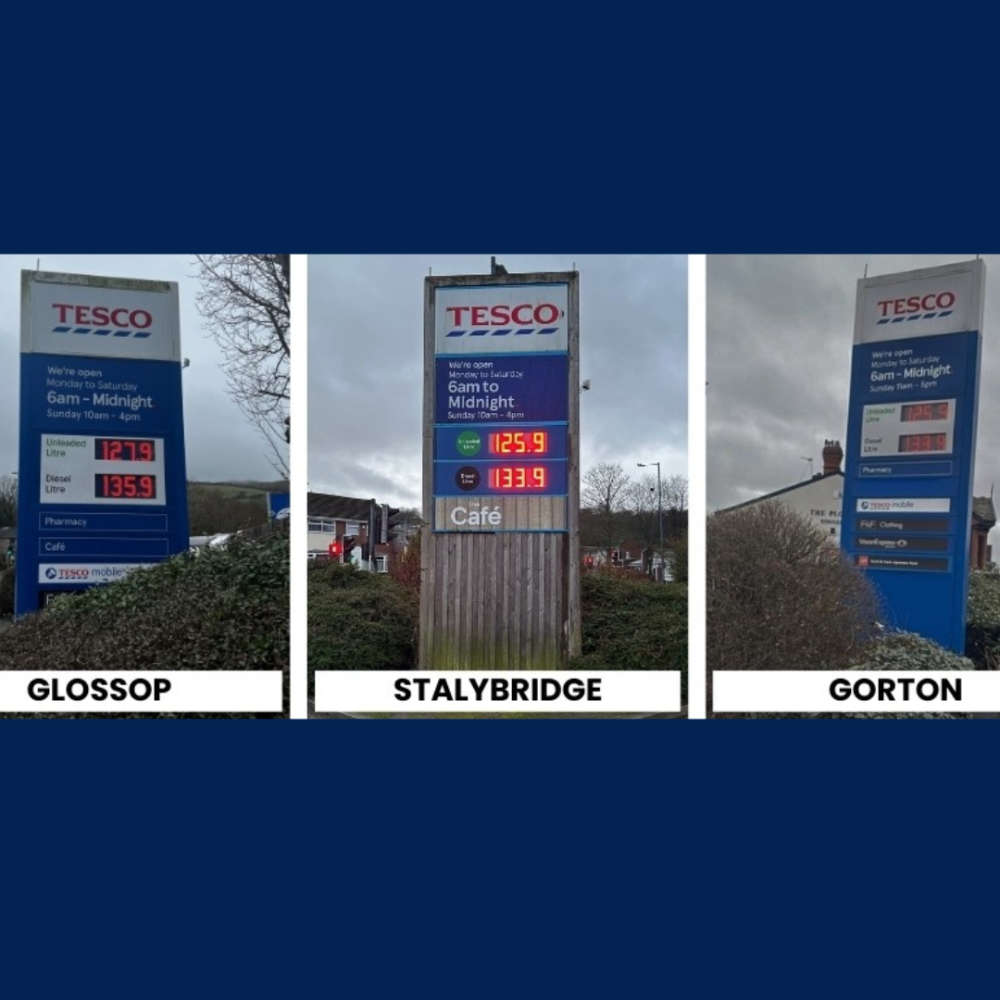
Drivers in Glossop have been asking the question: why does petrol sometimes cost more at one supermarket forecourt than another just a few miles away?
The photograph, taken on the same day, shows the prices at Tesco stores in Glossop, Stalybridge and Gorton - highlighting differences between locations.
Why prices vary
The short answer is that fuel prices in the UK are set locally, not nationally.
Retailers adjust their prices based on nearby competition, operating costs and local demand. This means neighbouring towns can experience different pump prices, even when the fuel comes from the same supplier.
Supermarkets and forecourts closely monitor competitors in their area. A filling station located near rivals such as Asda, Sainsbury’s, BP or Shell may lower its prices to remain competitive. In areas with fewer alternatives, prices can be higher.
Operating costs also vary. Business rates, land values, staffing costs and the cost of transporting fuel from distribution depots can differ between locations - even within the same county. Stations on busy commuter routes or close to major retail parks may also price differently due to higher and more consistent demand.
This system, known as location-based pricing, is legal in the UK provided it does not discriminate against protected groups. Fuel is treated as a competitive retail product rather than a nationally regulated essential with fixed pricing.
Increased scrutiny
Concerns about fairness have grown in recent years.
The Competition and Markets Authority (CMA) launched a major review of the UK road fuel market after concluding that competition was not working as effectively as it should. The watchdog found that fuel margins - the difference between wholesale cost and pump price - had increased compared to historic levels, costing motorists significantly more overall.
While the CMA did not find evidence of illegal price-fixing or cartel behaviour, it said drivers were not always benefiting when wholesale fuel prices fell.
In response, the Government has introduced reforms aimed at improving transparency and competition. These include giving the CMA stronger monitoring powers and requiring retailers to share up-to-date pricing data so motorists can more easily compare forecourts - a move designed to encourage genuine competition.
So, is it fair?
Retailers argue that local pricing reflects market conditions and competition. Critics say it disadvantages communities with fewer options, who may end up paying more simply because they have less choice.
What is clear is that fuel pricing is now under greater scrutiny than ever before. With new transparency measures being introduced, motorists may soon find it easier to see where the best value really lies.
For now, however, one thing remains certain: where you fill up can still make a noticeable difference to your wallet.
The Glossop Chronicle contacted Tesco head office asking them to explain the discrepancy between the prices at their Glossop, Stalybridge and Gorton stores.
A Tesco spokesperson said: “We regularly monitor fuel prices in a local area to ensure we’re providing competitive prices for our customers.”
The Chronicle asked for further clarification on the specific price differences shown in the photograph, but no additional explanation was provided.
 More roadworks in line for huge bypass scheme
 Local author Inspires budding poets at All Saints CVA
 Glossop’s Happy Ramblers Mark 30 Years of Walking, Friendship and Fresh Air
 Hillmen denied fifth straight win