
High Peak is set to undergo the biggest change to local government in more than 50 years, after the Government confirmed plans to abolish the area's existing councils and replace them with two new unitary authorities.
High Peak Borough Council and Derbyshire County Council will cease to exist, subject to Parliamentary approval, on 1st April 2028.
They will be replaced by a new unitary council covering the north of Derbyshire, alongside a second authority serving Derby and the south of the county.
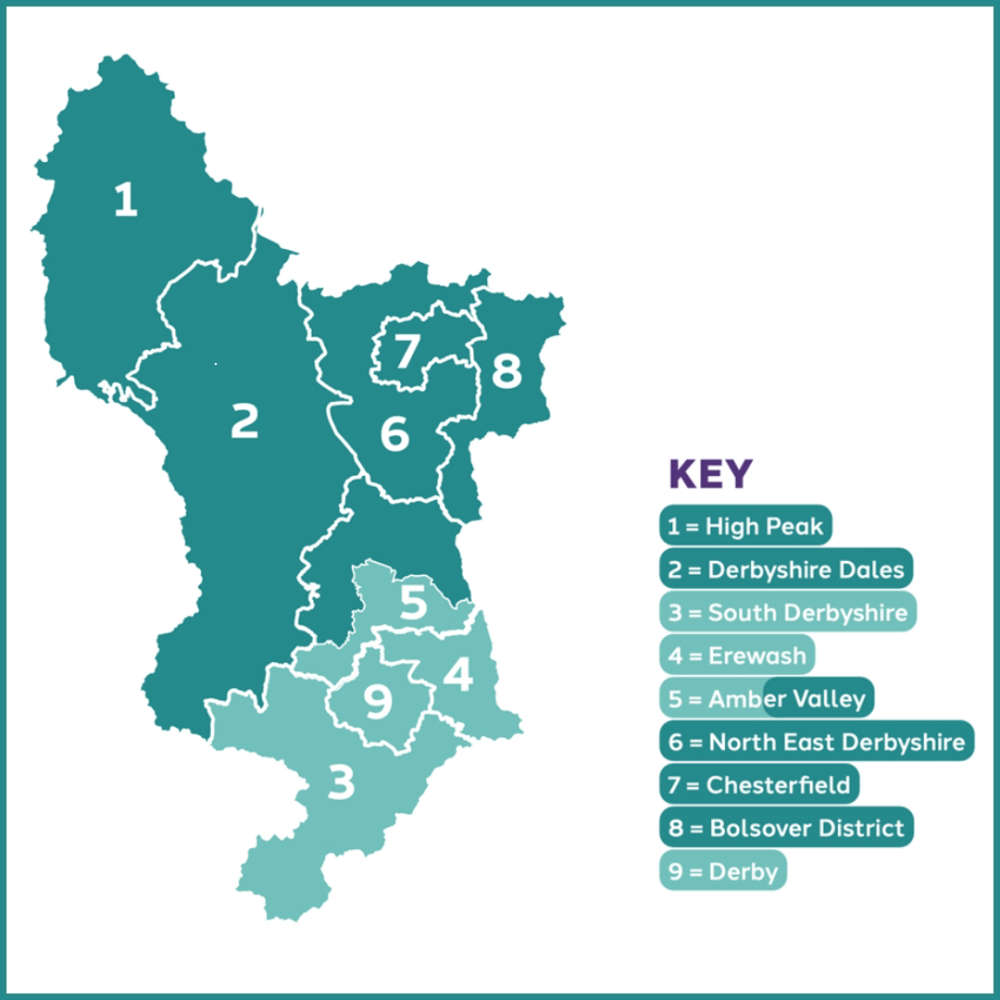
The new northern authority will cover High Peak, Chesterfield, Derbyshire Dales, North East Derbyshire and Bolsover, as well as the northern part of Amber Valley. The boundary between the two new councils will split Amber Valley, with residents' addresses determining which authority will provide their services.
The Government announced its decision on Thursday 16th July, as part of a nationwide programme of local government reorganisation designed to simplify council services and make them more efficient.
At present, Derbyshire operates a two-tier system, with Derbyshire County Council responsible for upper-tier services, and eight district and borough councils providing lower-tier services. Derby itself already operates as a single-tier unitary authority.
Under the new arrangements, the two new councils will be responsible for all local government services in their respective areas, including social care, education, children's services, roads and highways, waste collection, housing, planning, parks and leisure.
The new northern council is expected to serve around 539,000 residents.
Elections are due to take place in May 2027, when residents will elect a 'shadow authority' for each of the new council areas. These bodies will begin preparing for the new system while existing councils continue to run local services.
High Peak Borough Council Leader, Councillor Anthony McKeown, said: “The Government has decided the new landscape for local government in Derbyshire. In doing so I welcome the decision that supports the option that the Council developed with partners across the County and submitted as our preferred option, known as Option B1.
“The decision represents a once-in-a-lifetime opportunity to re-design and refocus council services so that they better meet the needs of our residents and businesses removing any confusion on whether it is a County or Borough responsibility with everything coming under one roof in the new Council.
“This decision gives us the clarity about the future of local government services in the High Peak and Derbyshire and means we can continue the positive and constructive work we’re doing with all Derbyshire councils to ensure a smooth transition to the new councils.
“Whilst High Peak will no longer exist as Council area from April 2028, our thriving towns, villages and strong communities will remain, and they will continue to play a key role in the success of the new Council. Our focus will be on delivering our legacy plan which works to ensure and secure the best outcomes for our residents and businesses in being ready to engage with the new Council as it develops.
“We are committed to keeping everyone informed about our progress at every stage of the process. There is more information on our website (www.highpeak.gov.uk/Local-Government-Reorganisation) including the answers to some of the questions you might have about what this means locally. We will be updating this information regularly as the plans and services develop.
“Finally, I would like to say thank you to everyone who took part in the consultations regarding reorganisation. Your input has helped shape our shared future.”
Whilst High Peak Borough Council supported the proposal for a northern unitary authority, Derbyshire County Council had argued that a single unitary authority covering the whole of Derbyshire would have been the best option. That proposal was rejected by the Government.
Derbyshire County Council Leader Councillor Alan Graves said: “Local councils were asked to put forward proposals for the future of local government in their area and Government decided that the two-council option proposed by district and borough councils was in the best interests of local residents and businesses.
“Based on our own research and public consultation, we believed that a single council for the whole of Derbyshire was the best option. But we agree that having two councils is better than the current system of 10 as it will save money and be easier for residents to understand.
“Our residents deserve a modern, efficient and effective system of local government that can meet current and future challenges and support the area to grow and prosper, working closely with the East Midlands Combined County Authority. This historic decision brings that vision closer to becoming a reality with two new councils being created to provide all council services in the north and another for the city and south of the county.
“It’s not a merger – it’s a fresh start and an opportunity to do things differently. Now we’re focussed on working with our district, borough and city council colleagues to plan how services in Derby and Derbyshire will be delivered by two councils in the future.”
The proposals have proved controversial across Derbyshire, with different council leaders arguing over the best structure for the future.
Supporters of the reorganisation say the new system could improve efficiency, make services easier for residents to access and remove the confusion caused by having different councils responsible for different services.
However, concerns have also been raised about the financial implications, the size of the new authorities and whether large unitary councils will be able to adequately serve rural communities, including those across the High Peak.
Councillor Graves said the decision represented an opportunity to create a more modern system of local government.
He added: “There’s still a lot of detail yet to be agreed, such as what the new councils will be called. But we want to reassure residents that the council services they receive will continue as normal in the meantime and we’re working hard to make sure these services continue seamlessly as we switch from 10 councils to two on 1st April 2028.”
Over the coming months, work will begin on establishing the new authorities, with detailed decisions still to be made over governance, staffing, council structures and the future delivery of local services.
 New podcast offers support and advice for unpaid carers
 Glossop dad to run 10K for children affected by war in Ukraine
 Residents invited to join Peak Cluster awareness walk