

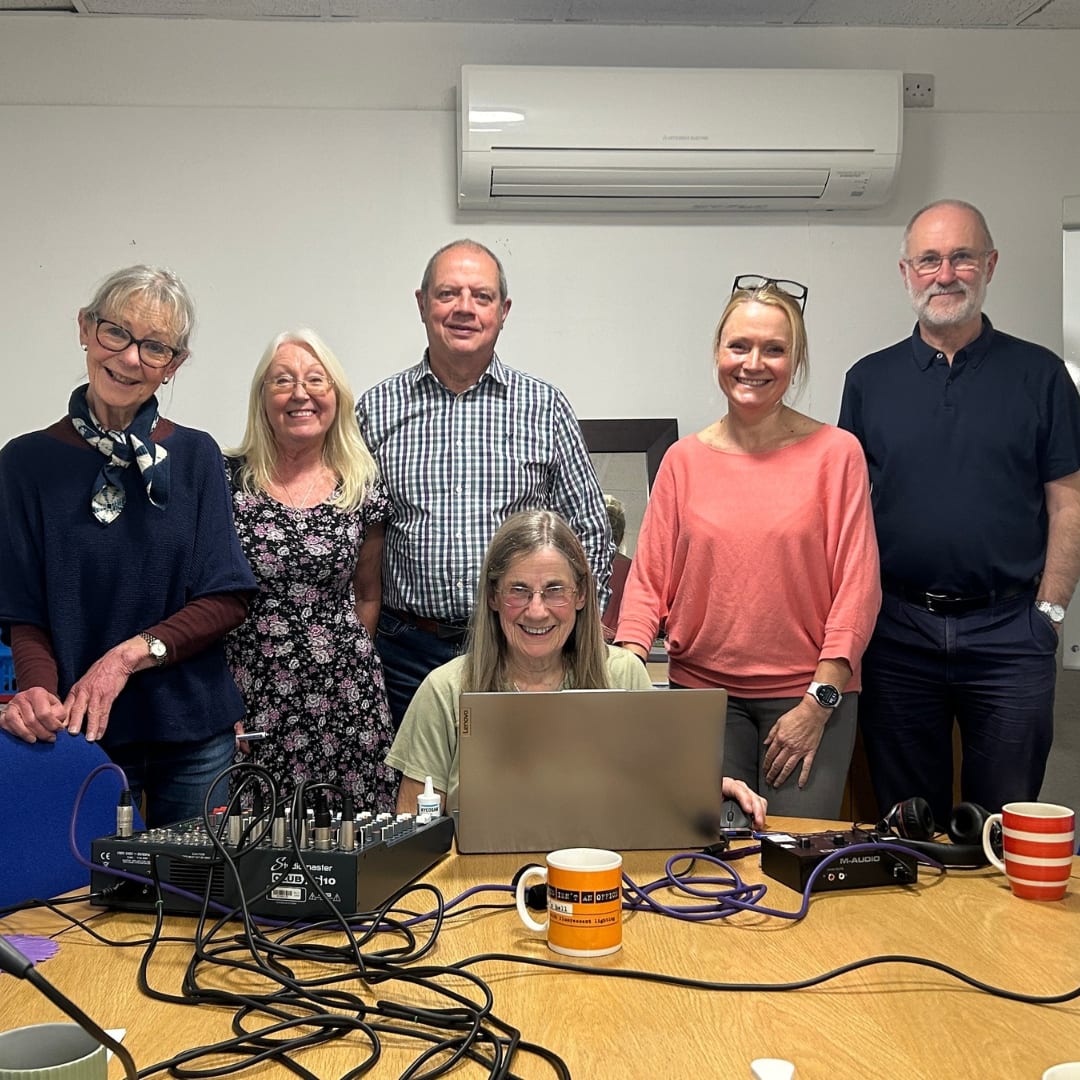
Claire Webber, editor of the Glossop Chronicle, visits the volunteers making sure local news can be accessed by everyone.
When I was invited to meet the team behind 'Glossop Talking Newspaper', I wasn't quite sure what to expect. I knew the service recorded local news for blind and visually impaired people, but I hadn't appreciated quite how much work, care and fun went into making it happen.
I also hadn't anticipated how special it would feel to hear my own words, and the words of those who contribute to the Glossop Chronicle, being read aloud, knowing they would reach people in our community who might not otherwise be able to access the news through the printed paper or online.
As the editor of the Chronicle, I spend much of my working life researching and writing the stories happening across Glossopdale. I get the chance to see behind the headlines - to meet people, hear their stories and find out about the things happening in our community. But once each week's paper has been finished and sent off to the printers, my attention immediately turns to the next edition. I don't often stop to think about how the stories are received, or the different ways people might access them.
So, to sit in a room at The Bureau and hear the Chronicle being brought to life by a group of enthusiastic volunteers was a real privilege. It was a reminder of why local journalism matters, and a chance to meet the people who go to extraordinary lengths to make sure nobody is left out of the conversation.
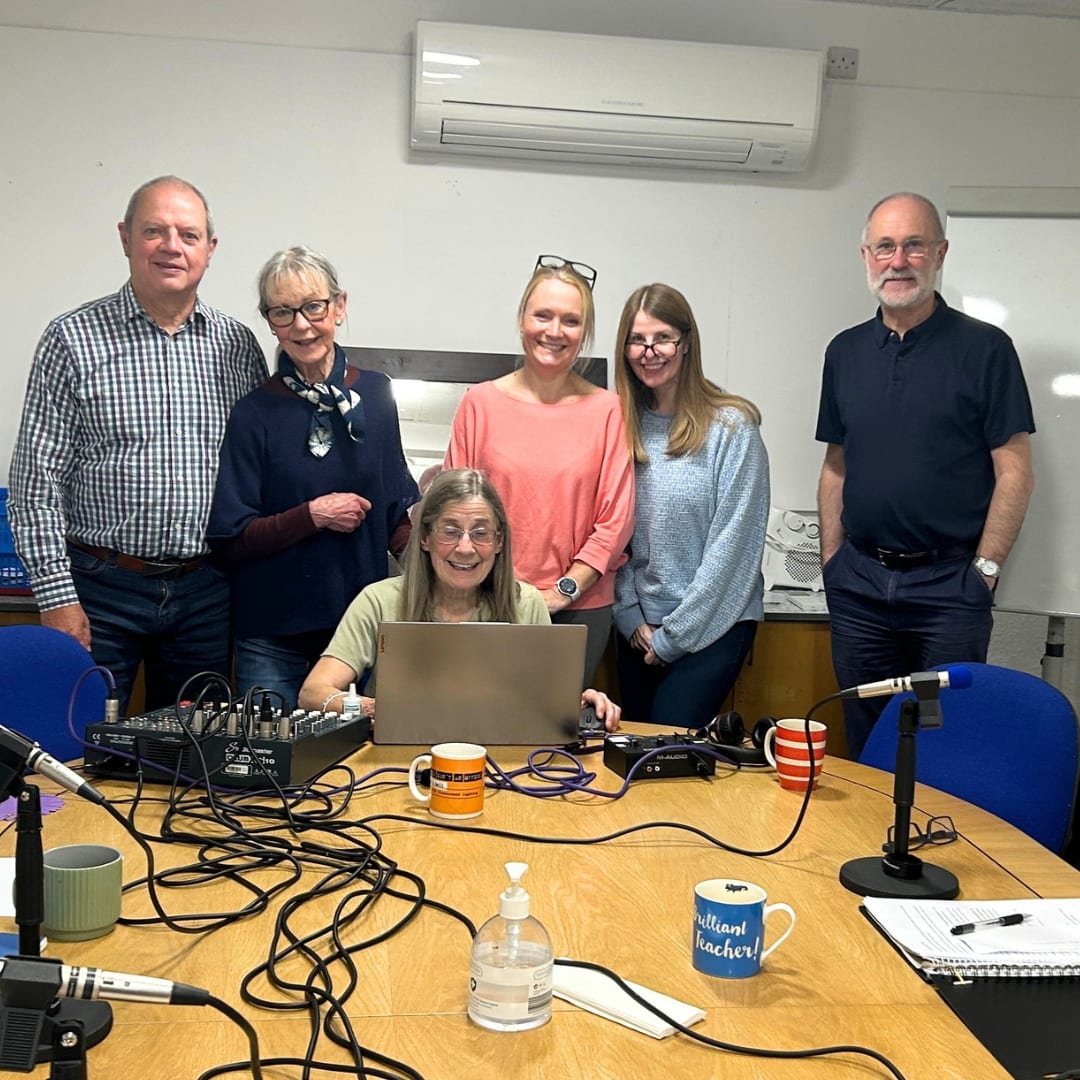
Photo: Claire Webber, editor of the Glossop Chronicle (2nd right) with members of the team.
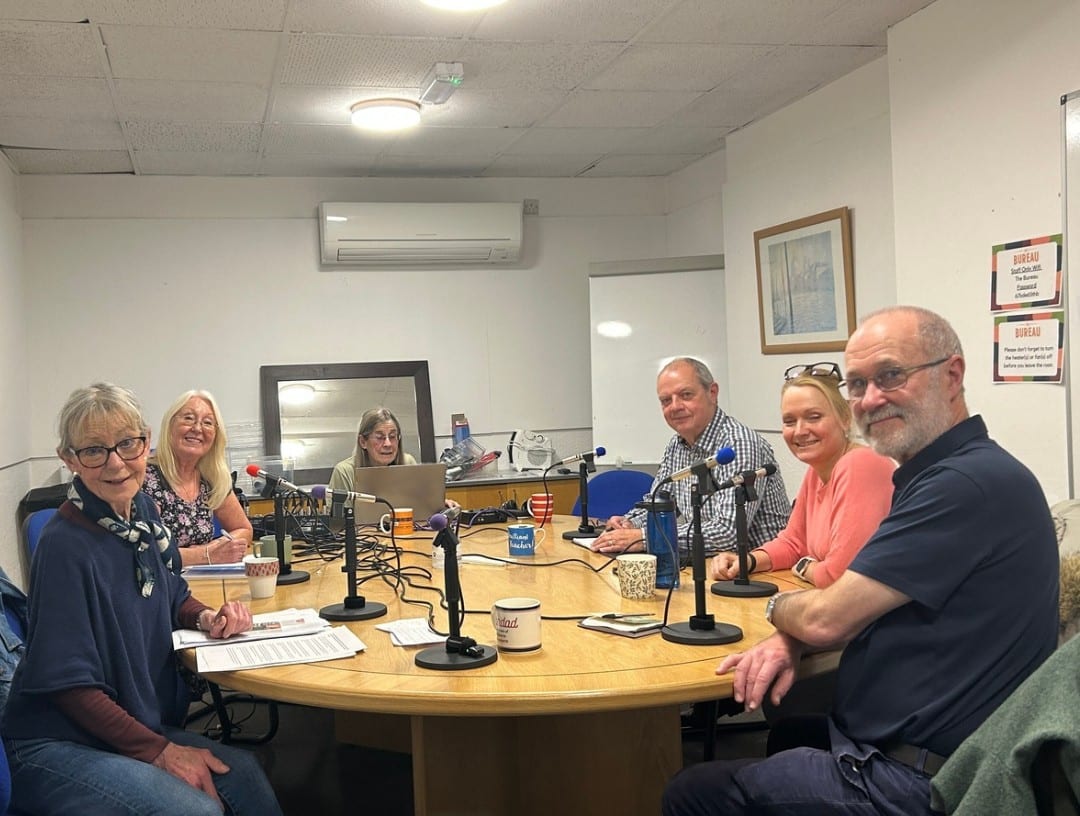
The first thing that struck me when I walked into the room was how friendly and sociable everyone was. There was plenty of chatter and laughter, but I quickly noticed that beneath the relaxed atmosphere was a very slick and professional operation. Everyone seemed to know exactly what they were doing, and the programme came together with an impressive amount of organisation.
On the morning I visited, Andy Milligan was acting as editor, alongside volunteers Mel Whiteley, Nev Watchurst, Jan Barrow, Joan Browne and Cilla Hollman. Chair Liz Strek was also there to tell me more about the group and its history.
Glossop Talking Newspaper (GTN) has been helping blind and visually impaired people stay connected with their local community for more than 35 years. Each Thursday, a team of six volunteers, drawn from a wider group of around 18, gets together at The Bureau to record news from the latest edition of the Glossop Chronicle, alongside other information which they find online.
The recordings are sent out free of charge on memory sticks, with listeners also able to access them via the GTN website and through Alexa. It is a service that has evolved considerably since it began in 1989.
The idea came from Simon Molloy, then manager of the Volunteer Bureau in Chapel Street, who started making a weekly recording using a cassette recorder. In those early days the process was incredibly labour-intensive.
Technology gradually changed the way the group worked, and in the early 2000s, the team moved from cassette tapes to digital recordings, investing in a laptop, microphones and an audio mixer. The volunteer group also grew.
In 2018, GTN became a formally constituted group with elected officers, enabling it to apply for grants to replace and update aging equipment.
But while the technology has changed, the purpose remains the same: to bring local news to people who might otherwise struggle to access it.
Behind the scenes
Andy talked me through the process, which begins well before everyone gathers on a Thursday morning.
He explained that one volunteer takes on the recording element, with Cilla doing that job on the morning I visited. Whoever is acting as editor that week will usually start preparing the programme a couple of days earlier, by looking through the stories on the Glossop Chronicle website and Facebook page.
The editor selects the articles they think will be of most interest to listeners and, where necessary, carefully shortens them. Some stories can be quite long, so the challenge is to keep all the important information while making sure the finished programme doesn't become too lengthy.
Andy explained that there is a particular skill in knowing what to keep and what can be left out and the team has to be fairly ruthless, as the recording generally lasts around 45 minutes.
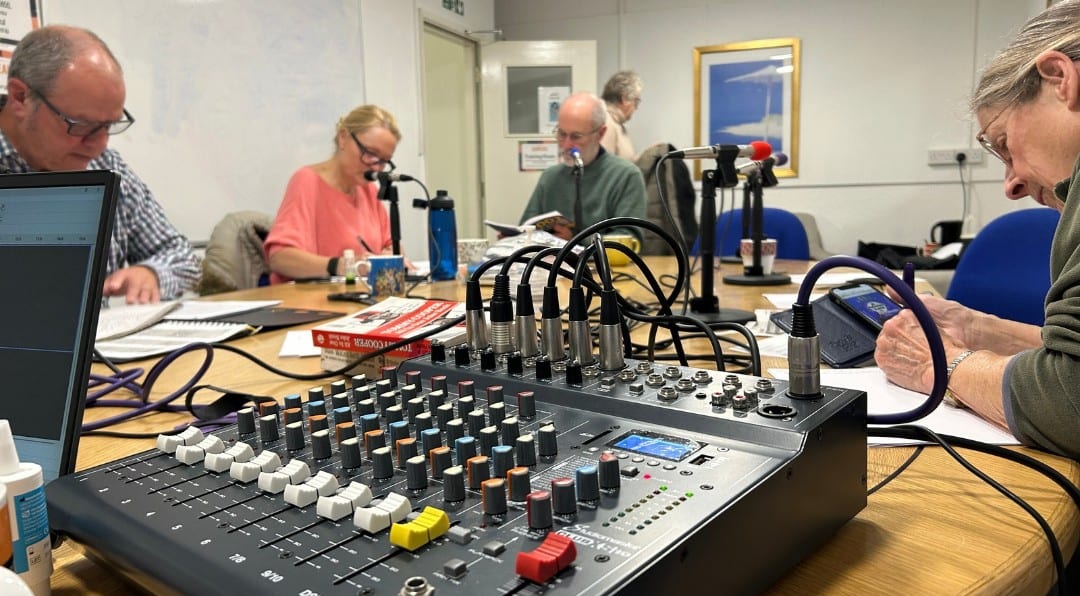
The Thursday morning session brings another stage of editing. Two copies of the Chronicle are laid out, the editor's chosen stories are marked up and volunteers cut out the articles they want to include. It's a wonderfully straightforward and practical part of the process. The articles are then reviewed and edited as necessary before being arranged into a running order.
The team considers what is likely to be of most interest to listeners, as well as which stories deserve to lead the programme. As Andy pointed out, there is often plenty of worthwhile community and charity news, but sadly with limited time not everything can make the cut. Once the stories have been selected, the programme takes shape.
Andy explained that the group deliberately wanted to create something a little different from some of the more formal talking newspapers he had visited when he first became involved.
Rather than having a rigidly scripted bulletin, Glossop Talking Newspaper aims to sound relaxed and natural. If a story sparks a reaction, the volunteers are encouraged to talk about it. The idea is to make the recording feel less like a newsreader delivering headlines and more like a friendly conversation.
The programme ends with a reminder of any contact details, a sports review and a few jokes before everyone joins in with a communal goodbye. It's a small detail, but one that says a lot about the spirit of the group. They aren't simply reading out a newspaper - they are creating a weekly companion for people who might otherwise feel disconnected from what is happening around them.
Once the recording is finished, the team check that everything has worked properly before copying it onto memory sticks. These are placed in special envelopes, ready to be sent out through the post.
There are volunteers who help prepare the envelopes, too, including one blind lady who helps her husband get them ready. It is another example of the community effort behind a service that has been part of Glossop life for so long.
A service built on personal connections
Talking to Liz, the group's chair, I began to understand just how much personal experience and commitment sits behind the service.
Liz first joined as a volunteer after retiring from teaching in 2011. She initially came along just to read but soon became interested in how the service was organised. Still wearing what she described as her “working head”, she began suggesting ways things could perhaps be done differently.
The volunteer who had been leading the service, David Andrews, later became seriously ill. He asked Liz and fellow volunteer Clive Easteal to take over for a fortnight over Christmas. Sadly, David's illness meant they ended up taking on the running of the service permanently. "It was a very steep learning curve" Liz remembers.
There were practical challenges, too. The group had been recording in an old building near the leisure centre, which was due to close, and The Bureau was moving to its current premises. For the first time, they needed to pay for room hire, so the organisation had to become a not-for-profit group with a more formal structure, including a chair, treasurer and secretary. Liz became chair, with Clive taking on the role of treasurer.
Then came Covid, which brought another major disruption. For a short time, Liz and Clive continued recording at opposite ends of a table, with screens between them, but eventually The Bureau office had to close and the service paused.
Getting going again was not straightforward. Some of the older volunteers did not return after the pandemic, and the group found itself short of people. There was a genuine worry that the service might have to close altogether. Fortunately, others rallied round and new volunteers came forward.
Mel is one of the more recent additions. Having moved to the area after retiring, she was drawn to the group because of a family connection.
"I used to read the newspaper to my grandad because he was blind" she told me. "That's what got me interested in the Talking Newspaper. It feels as though I'm carrying on something that was important to him."
The service has always been free for blind and visually impaired listeners, with its costs met through donations and fundraising. Grants from Derbyshire County Council have helped pay for new laptops and a sound desk, while organisations including the Women's Institute, Rotary and Round Table have also provided support.
More than a newspaper
When Liz first became involved, the team was sending out between 40 and 50 CDs each week. Today, fewer than 20 memory sticks are posted, but that doesn't tell the whole story. Recordings can also be played through their website and Alexa, and so the group has no way of counting everyone who listens digitally.
The volunteers are keen to make sure people understand that the service is not only for blind and partially sighted people. They would also like to reach anyone who could be lonely and isolated, those who can't easily get to the shops, people who are not on social media or anyone without family nearby to bring them a newspaper.
The recordings offer a regular way to hear about local events, community news and the people making things happen across Glossopdale. And, just as importantly, they provide a familiar voice and a sense of connection.
It is easy to underestimate how valuable that can be. We live in a world where news is constantly available at the touch of a button, but not everyone can access it in the same way. For some listeners, that weekly recording is an important link to the place they call home.
As the morning went on, I could see that the Glossop Talking Newspaper is as much a social group as it is a practical service. The volunteers enjoy one another's company, have a good laugh and, as Liz told me, sometimes get into deep conversations about all sorts of subjects that never make it onto the recording.
It really was lovely to see a group of people giving their time so generously, while receiving friendship and enjoyment in return.

A special moment for the Chronicle
After the news had been read, and I must say it was read beautifully, I was invited to take part in an interview for the programme. It felt rather strange to be on the other side of the questions for a change!
I enjoyed talking about my role as editor, my own journey into journalism and the work that goes into producing the Chronicle each week. I also took the opportunity to reassure listeners that the newspaper is here to stay and have a little moan about how busy I am!
Visiting the GTN was genuinely moving, and it made me feel so proud to be part of a local newspaper that play's such an important role.
It also made me think I might need to up my game! Knowing that a team of volunteers is selecting, editing and reading our stories so carefully is a wonderful reminder of the value of getting them absolutely spot on!
I thoroughly enjoyed my visit and was struck by the warmth, enthusiasm and dedication of everyone I met. The service has survived changing technology, changes of premises, the loss of long-standing volunteers and the disruption of a pandemic. It continues because people care enough to give their time and make sure local news remains accessible.
They are providing listeners with a friendly voice, a sense of belonging and the reassurance that Glossop hasn't forgotten them.
Could you be part of the team?
Glossop Talking Newspaper is keen to welcome more volunteers to help keep the service going and reach even more people.
You don't have to commit every week. The group can offer flexibility, with people able to help once a month, every couple of months or whenever their time allows. There are opportunities to read, edit, help with recording and copying, or lend a hand with promoting the service, including setting up and managing a Facebook page.
If you would like to find out more you can contact the team via The Bureau on 01457 865722.
You can also listen to a recording and find out more about the service at www.glossop-talking-newspaper.com
 Independent review recognises progress in Derbyshire highways service
 Council buys Hadfield industrial sites
 Leader welcomes focus group’s views to help shape council’s future
 Ashton fire walk raises over £10k for NHS charity