

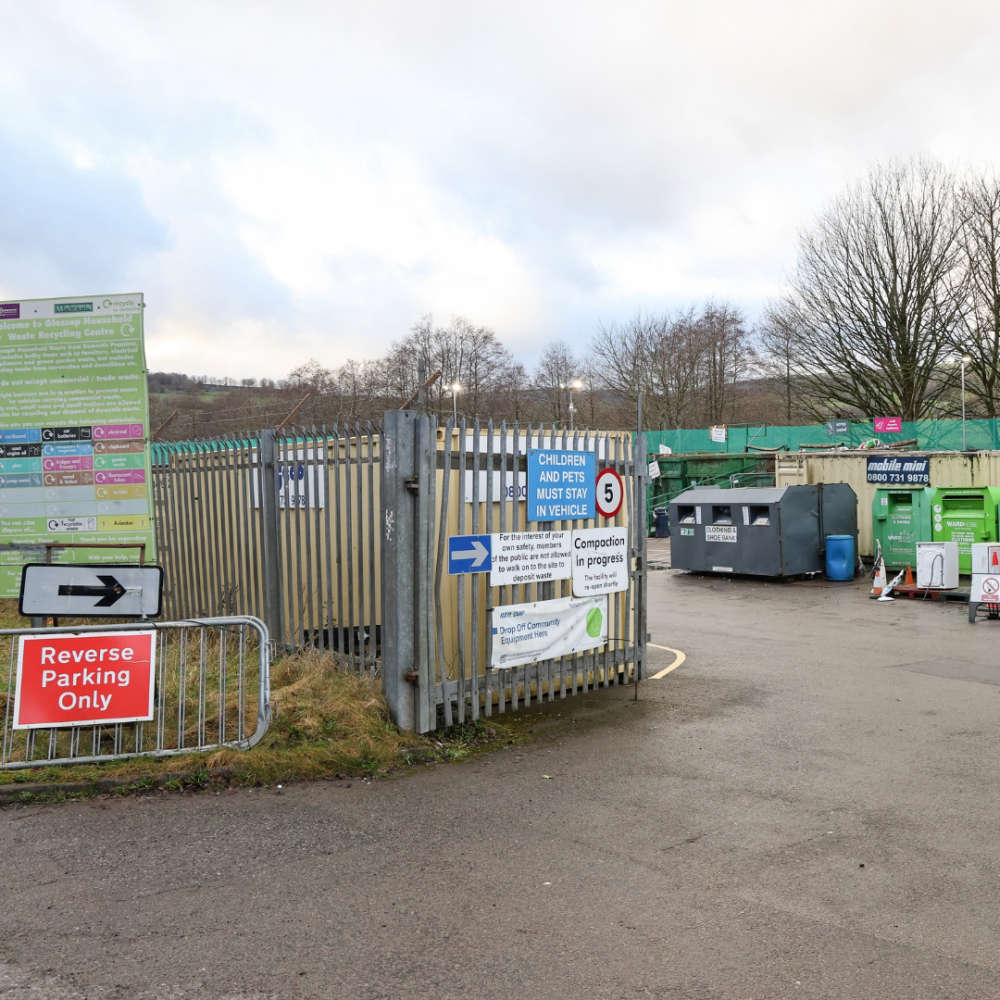
As Derbyshire County Council moves closer to a decision on the future of Glossop Household Waste Recycling Centre, residents are being urged to engage with the forthcoming public consultation.
The Reform-led authority confirmed earlier this month that the proposed closure of the site will remain within its 2026-27 budget framework, despite cross-party attempts to remove it from the savings programme. A 12-week public consultation will take place before a final decision is taken; however, no start date has yet been announced.
The Chronicle reported on the budget debate at County Hall, where councillors from across parties raised concerns about increased travel to Buxton, potential fly-tipping, accessibility for older residents, and the broader environmental impact.
Now, fresh analysis from local resident Richard Armitage is adding further weight to calls for clarity - and for strong community engagement when the consultation opens.
“We Need the Full Facts”
Richard Armitage, a Glossop resident and regular user of the household waste recycling centre, as well as a member of Glossopdale Active and Sustainable Travel (GAST), has produced a detailed analysis questioning both the financial justification for the closure and the longer-term strategic vision behind it.
He argues that the identified saving of approximately £130,000 this year and £240,000 next year is modest when set against Derbyshire County Council’s wider financial challenges, which run into many millions of pounds.
“For a saving that is comparatively small” he says, “Glossop residents are being asked to absorb significant inconvenience and significant additional personal cost. On all levels this is unreasonable.”
Drawing on his work with GAST, Richard’s analysis begins with how heavily the Glossop Household Waste Recycling Centre is used. He estimates that the site currently handles over 100,000 visits per year, and if it closes, those visits would be redirected to Buxton, creating an average additional 23-mile round trip per visit. This would amount to around 3 million extra vehicle miles every year on the Glossop–Buxton route alone.
Using standard motoring cost calculations, Richard estimates this extra travel would add around £11.50 per trip in fuel and vehicle expenses, amounting to more than £1.5 million per year across all Glossop residents, with each journey adding at least an extra hour of driving time.
He also estimates that this diversion of traffic would generate around 735 tonnes of additional CO₂ emissions annually, increasing congestion and placing further pressure on already busy roads.
“That is extra congestion, extra emissions and extra pressure on roads that are already busy,” he says. “It is environmentally counterproductive at a time when we should be reducing unnecessary journeys.”
Richard warns that the impact of the closure would not be limited to motoring and emissions. People without access to a car - a significant minority in Glossop - would struggle to use a tip in Buxton, potentially relying on neighbours or family members to make the trip for them.
His report adds that additional traffic would also add roughly 3 million miles on the Glossop-Buxton roads annually, likely delaying buses and other local traffic. Some of this mileage could be reduced if residents choose to place more waste into their wheelie bins, but this would increase the load on bin lorries and the time required to complete collection rounds. Should a lorry reach full capacity mid-round, it would have to be emptied, further raising the council’s costs. The strain on bin collections could also lead to disputes over inappropriate items being placed in bins and may even lower overall recycling rates.
Unanswered Questions
Beyond transport, Richard believes there are key unanswered questions that residents need clarity on:
-
What are the total running costs of the site, and what income does it generate?
-
What does it cost the private contractor to operate the facility, and how is that arrangement structured?
-
Who owns the land, and what is the long-term plan for it if the site closes?
-
What costs will Derbyshire County Council face if the site stands vacant for a period?
-
What modelling has been done on the impact of closure on recycling rates?
Derbyshire’s recycling rate currently sits at around 47% - broadly average compared with other counties. Richard warns that reducing local access to recycling facilities could risk stagnation or decline, adding: “I cannot see how we can have a sensible consultation without answers to these questions being made available first. We have seen no published estimate of what effect this decision will have on overall recycling performance.
“At a time when councils are under pressure to improve environmental outcomes, that seems like a significant omission.”
Protecting Local Charities
Richard also highlighted concerns about the local charity Glossopdale Furniture Project, noting:
“Glossopdale Furniture Project received £11,051 in recycling credits in 2025. These credits are financial incentives paid by Waste Disposal Authorities to Waste Collection Authorities or to community groups and charities, designed to offset the costs of diverting waste from landfill and encourage recycling. Closing Glossop tip could put this important funding at risk, threatening a valuable local service.”
The Chronicle asked the charity for its perspective, and the board of trustees responded:
“Whilst Glossop’s Recycling Centre has not been the main source of usable furniture for our charity, its proposed closure may still have some indirect impacts on our work in the local area. With fewer local disposal options available, there may be a perception that our charity can assist with the removal of all unwanted household items, potentially leading to an increase in the volume of enquiries that we would be unable to accommodate. This would distract from our main charitable mission of helping those in need.
“More broadly, the closure could limit opportunities for reuse and responsible disposal of unwanted items in the area, which may have an effect on the local circular economy. Keeping good quality items in use for longer is vital for both the environment and for supporting households who rely on affordable pre-loved furniture.”
A Call for Imagination
Richard argues that the debate should not be framed simply as “keep or close” but as part of a bigger conversation about sustainable waste management in 2026 and beyond.
“Critically, this decision exhibits a lack of imagination. The real challenge facing all of us is how we recycle, reuse and reduce more effectively. Closing facilities without exploring creative alternatives does not answer that challenge.”
He suggests options such as:
-
Allowing local businesses to use the site for a charge, ensuring waste is handled properly while generating income.
-
Exploring partnerships with reuse organisations.
-
Developing models that combine recycling centres with local employment, repair schemes, and reuse hubs could offer a sustainable alternative to closure - one successful example is Moray Waste Busters in Forres, Scotland. Based within the local recycling centre, the enterprise diverts tens of thousands of items from landfill each year, selling items such as books, toys, kitchen ware and clothing through its busy reuse shop and reinvesting the proceeds to provide training, employment, and volunteering opportunities, while also supporting local charities and community education. Visit: https://moraywastebusters.org/
“In summary,” he concludes, “this proposal appears to move activity elsewhere rather than solve the underlying issue. Residents deserve to see all the evidence before such a permanent decision is made.”
Lessons from the 2023 Consultation
Two years before the current debate over Glossop tip, Derbyshire County Council ran a countywide consultation on its nine recycling centres in December 2023. The survey asked residents and businesses about potential changes, including different opening hours, fees for certain materials, and how the centres could best serve local communities. The consultation received 2,876 responses from across the county; however, Glossop was the least represented area, accounting for just 3% of replies.
This time, campaigners across Glossop are urging residents to make their voices heard, saying that if people care about this facility, they need to ensure their views are clearly recorded.
With the formal consultation yet to begin, Derbyshire County Council will soon publish details on how residents can submit their opinions. When it does, the town’s collective voice could prove decisive. Whether concerns are about cost, environmental impact, accessibility or long-term sustainability, the consultation offers Glossop an opportunity to shape the future of a service that thousands rely upon.
The Chronicle will provide full instructions on how to participate as soon as they are available.
 Five-year sentence for ‘terrifying’ Glossop robbery
 Have your say on the future of councils in Derbyshire
 More roadworks in line for huge bypass scheme
 Same supermarket, different prices: Fuel gap sparks questions