

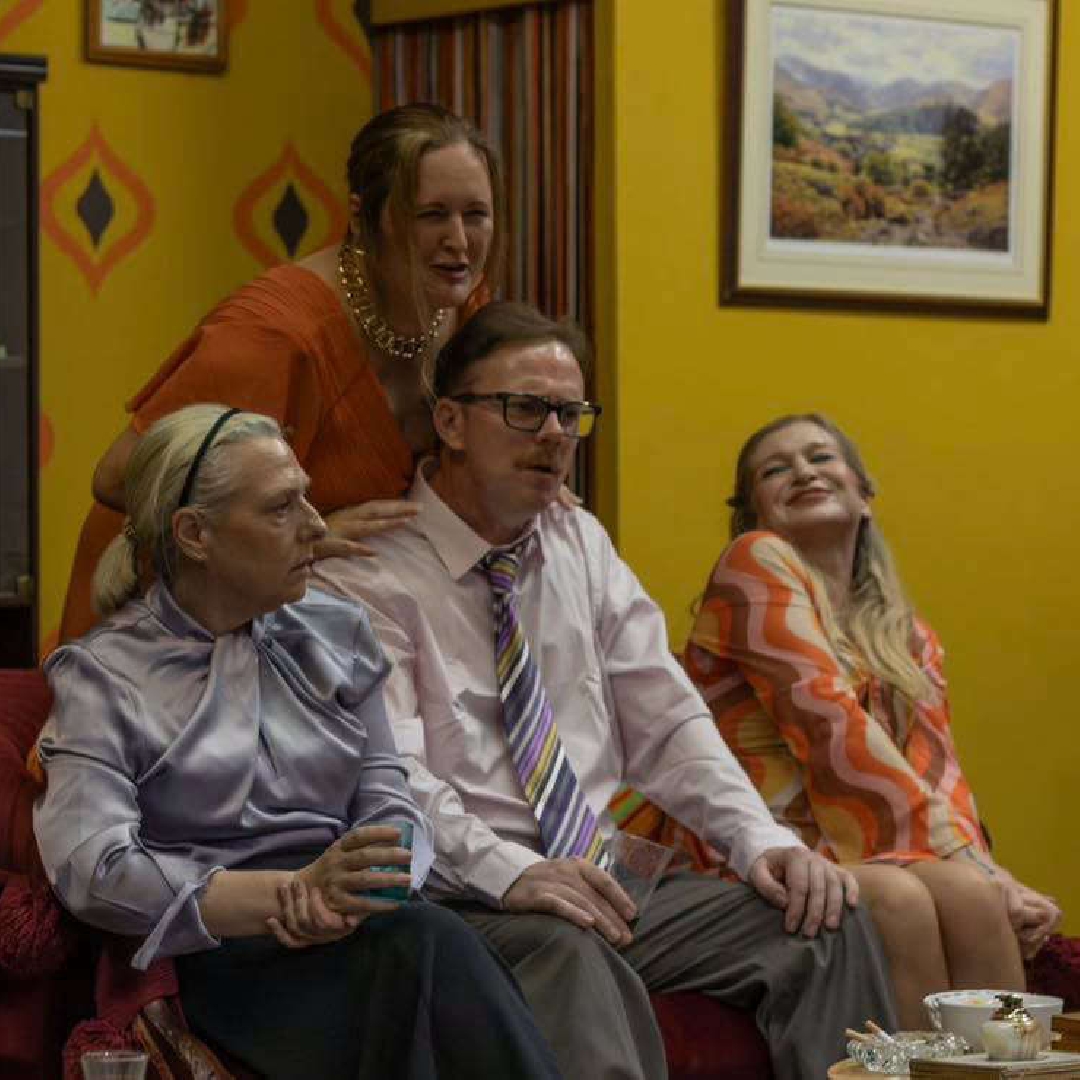
HLT's Abigail's Party sizzles in the heatwave as emotions reach boiling point
Audiences were invited to step back in time to the 1970s last week as Hyde Little Theatre staged Mike Leigh’s landmark British tragicomedy Abigail’s Party.
As a child of the era myself the set alone, designed by stage manager and set designer Mick Noonan, proved wonderfully nostalgic, on display before the play began. While far from a replica of my own parents’ home, it was certainly reminiscent of those of friends, where board games and Action Man were the toys of the time and Subbuteo matches were played in front rooms with varying degrees of success on thick pile, garishly coloured carpets.
In Abigail’s Party, the entire action unfolds in one suburban living room, a perfect reflection of the social aspirations and kitsch tastes of Britain’s emerging middle classes of the 1970s. The hideous geometric wallpaper in shades of mustard, orange and brown (ours was green), the hostess trolley, coffee table, magazine rack and, taking pride of place, the record player complete with carefully curated vinyl collection. All combined to create a set that was a nostalgic joy to behold. The costumes, too, captured the fashions of the decade perfectly.
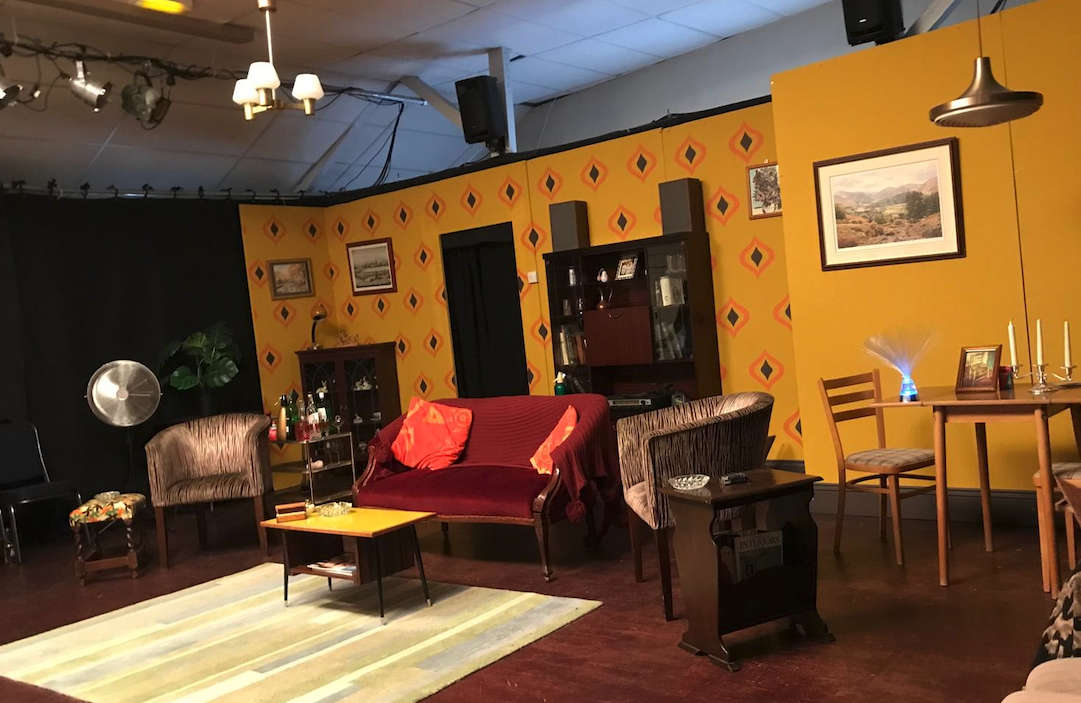
SCENE FROM THE '70s: Nostalgic set captured the time period perfectly.
Yet while the production is steeped in period detail, Mike Leigh’s play has lost none of its relevance. Nearly 50 years after its debut, it remains a razor-sharp examination of class anxiety, social ambition, relationships, loneliness, emotional manipulation and the cracks that lie beneath apparently respectable suburban lives. Its brilliance lies in exposing how ordinary conversation can slowly descend into unbearable tension amid the endless gins, ales and cheese and pineapple cocktails.
Back then, my own family would have fallen short of the standards set by characters Beverly and her estate agent husband Laurence. We were more akin to Angela and Tony, still shopping at Sainsbury’s rather than the Co-op. We didn’t own Laurence’s smart Mini either, which he regularly upgraded for a new one. Rather we had an ageing Morris Marina, although, like Beverly and Angela, my own mother didn’t drive.
The obsession with status and acceptance, however, has hardly disappeared. Today we project our carefully curated lives across social media; in the 1970s, people invited the neighbours around to admire the latest décor, gadgets or dining table centrepiece. The methods have changed, but the desire to impress remains remarkably familiar and partly explains why Abigail's Party continues to endure and enthral.
Beneath the comedy lies something much darker too. Every awkward pause, forced smile and passive-aggressive remark reveals relationships under strain. Leigh developed the play through lengthy improvisations with the original cast rather than creating a conventional script, giving the dialogue an astonishing naturalism that still feels authentic today and this was gloriously captured in its entirety throughout this production.
Many people of a certain age will also remember its legendary 1977 BBC Play for Today adaptation, making any new production one that inevitably carries high expectations.
Hyde Little Theatre rose to that challenge in style thanks to an accomplished cast and director who delivered a heatwave of emotions as the temperatures reached boiling point, literally inside and out.
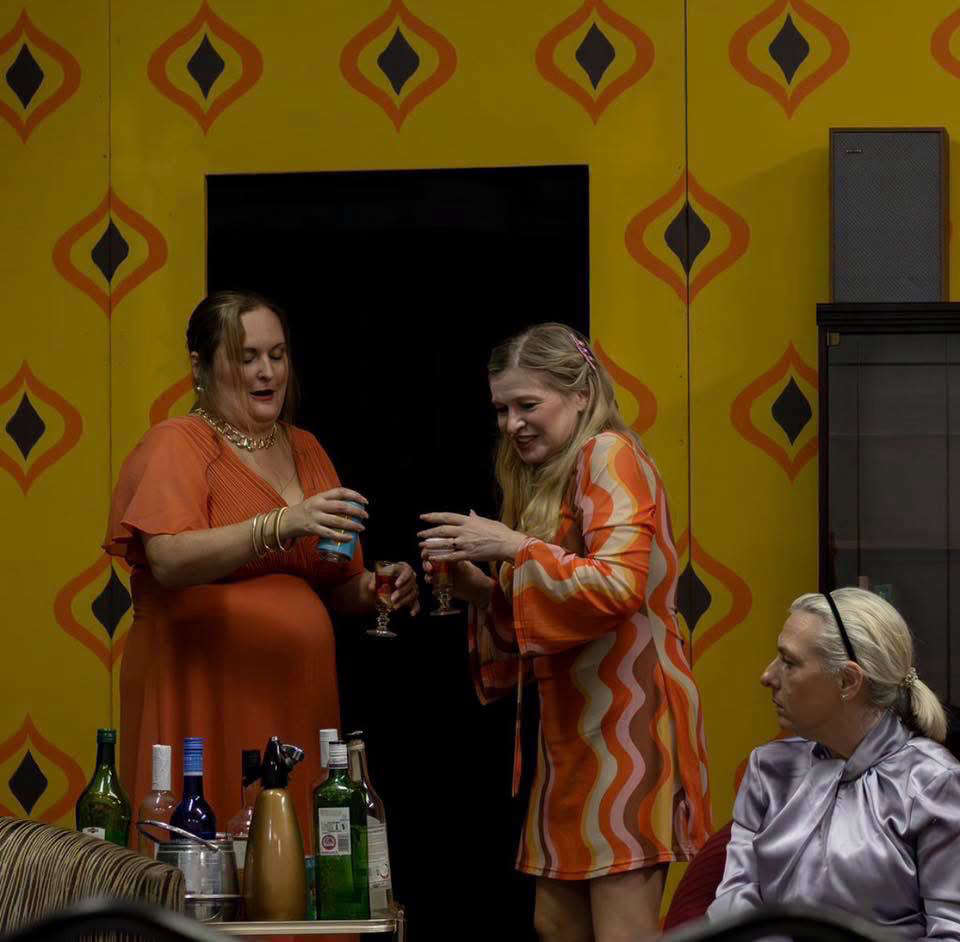
PARTY TIME? Beverly (Rachael Ashworth), Angela (Beverley Davies) and Susan (Amanda Kenyon).
Rachael Ashworth was deliciously domineering as the socially ambitious Beverly, effortlessly combining charm, manipulation and barely concealed cruelty, with traits of the original Alison Steadman performance evident, while still making the character very much her own. Her determination to orchestrate every aspect of the evening, from the music to the drinks and even the behaviour of her guests, gradually crosses the line from attentive hostess to controlling, manipulative bully.
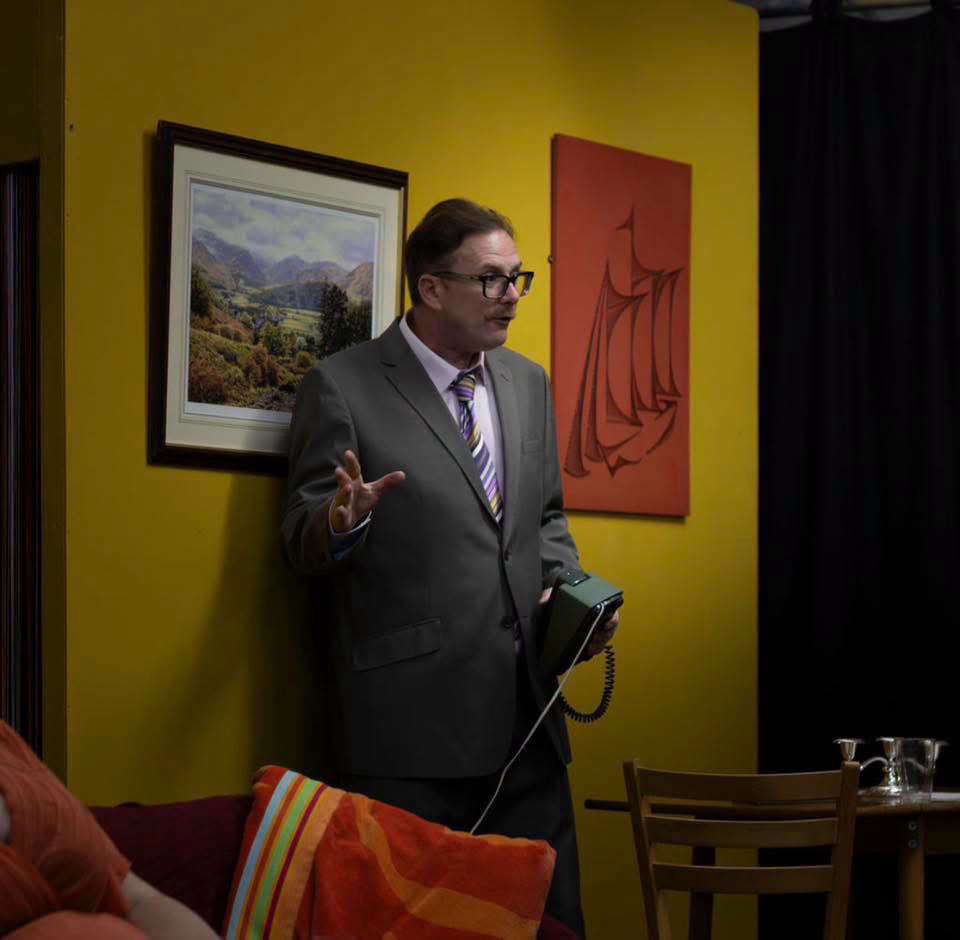
STILL WORKING: Long-suffering husband Laurence (Dale Nugent).
Opposite her, Dale Nugent delivered an equally outstanding performance as her long-suffering husband Laurence, the stressed estate agent driven ever closer to breaking point by his wife’s relentless needling and unashamed flirtation with new neighbour and ex-footballer Tony. Laurence’s attempts to cling to culture and refinement, through his treasured volumes of Shakespeare and Dickens and reproductions of Van Gogh and Lowry, only emphasise how trapped he feels within his own home and unrewarding marriage, burying himself in work and a sense of duty to provide while being made to feel wholly inadequate by Beverly at the same time.
Beverley Davies was perfect and simply spot on as naïve, eager-to-please Angela, capturing completely both her innocence and occasional tactlessness with a flowingly natural performance, while Phil France was quietly superb as her monosyllabic husband Tony. Beneath his loud ‘70s shirt simmered a barely restrained menace that added an unsettling edge whenever he spoke until his true colours and nature are ultimately exposed. Poor Angela - the abusive nature of such relationships (in fact both) highlighted today in new laws concerning how coercive control and domestic violence are addressed.
Amanda Kenyon brought warmth and vulnerability to Susan Lawson, the divorced and socially awkward mother of the unseen Abigail, whose off-stage teenage party gives the play its title. Although Abigail never appears, the distant sounds of her gathering provide a constant reminder that events outside mirror the emotional chaos unfolding within the Moss household.
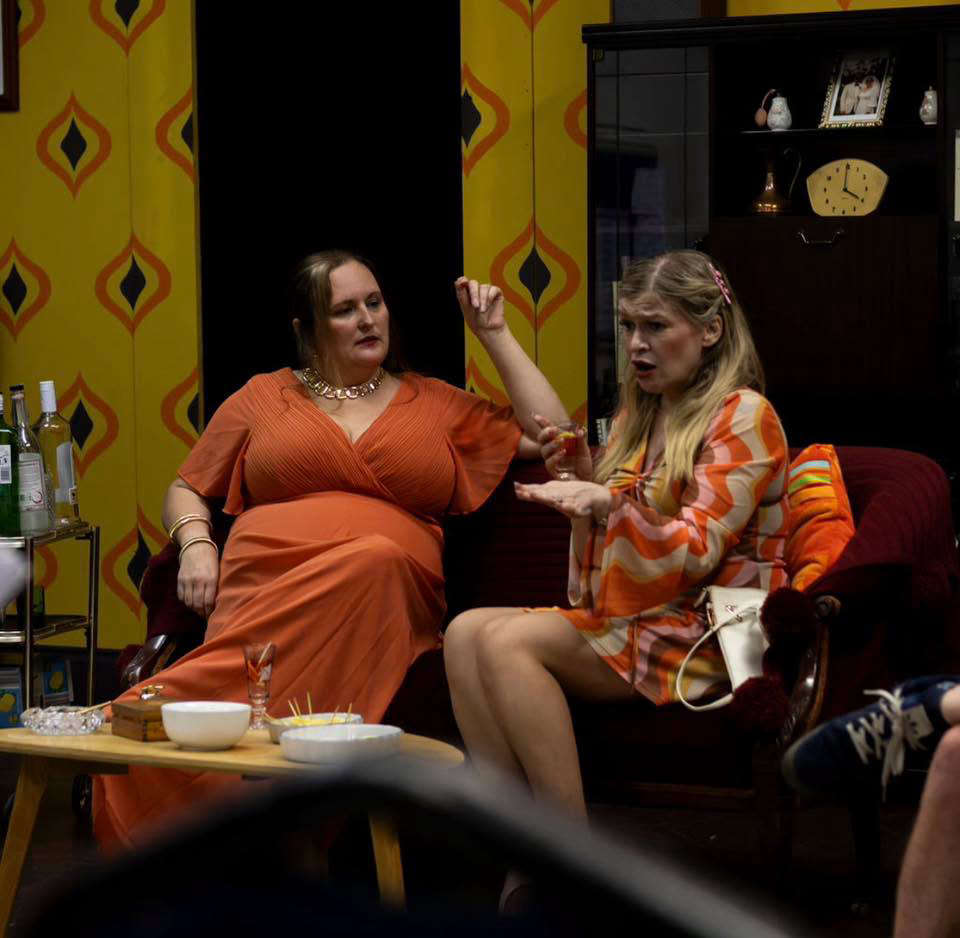
CHARACTER STUDIES: The manipulative Beverly even looks to control Angela's make-up routine!
The technical team deserves praise too. Music is a vital ingredient in Abigail's Party and never far away with songs by Elvis Presley, Tom Jones and José Feliciano to name but a few helping define the period and the emotional landscape. The record player ultimately becomes the battleground upon which Beverly and Laurence wage their domestic war, with Laurence repeatedly attempting to lower the volume or change the record before the evening reaches its shocking climax, the comedy gradually shifting to smiles of embarrassment and ultimately horror.
Achieving the right balance of dialogue, music and volume is no small feat, and it was handled expertly throughout by Andy Gelsthorpe. Josie Kirby (production manager), Andy Cavanagh (lighting), Jake Ashworth (props and programme) and Lynda Taylor must be commended for their backstage efforts to bring this production to the Little Theatre Studio stage.
Director Norma Raif can take a bow for bringing together every element of this deceptively complex production. The intimate setting of Hyde Little Theatre’s Studio provided the ideal venue for the play’s slow-burning claustrophobia, allowing the audience to feel almost like uncomfortable guests trapped in the room with the characters. A true ‘fly on the wall’ experience!
Performed during the hottest week of the year so far, the emotional temperature inside the studio mirrored the heatwave outside. By the final act, the audience had witnessed not simply a nostalgic trip back to the 1970s, but a compelling reminder that while fashions, décor and music may change, the complexity of human relationships, insecurity, ambition and the need to belong remain timeless. Well done to all involved.
Review by Nigel Skinner
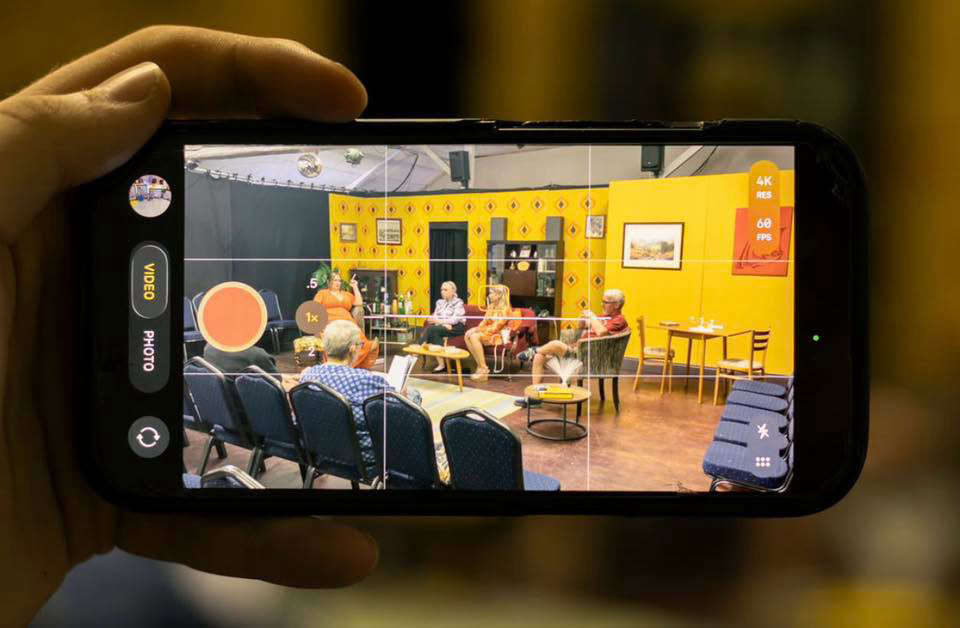
SUBURBAN LIVES IN FOCUS: HLT's Abigail's Party.